Originally posted to Instagram on July 11, 2021. Edits for clarity and grammar have been made.
What is filtering?
Filtering is when you add unnecessary words to your document explicitly telling the reader what the character sees, hears, feels, and thinks. It’s the most obvious in first person POV, but it occurs in third person POV as well.
There are specific words that indicate filtering such as: noticed, saw, heard, felt, knew, wondered, believed, decided, hoped, smelled, watched, (and many, many more).
Examples of Filtering:
I see the birds flit from one branch to the other. I feel the humid, summer air wrap around me and I think about all the summers that came before this one. I hope that Grandma will be proud of what I’m doing… who I’ve become, but I don’t think she would be.
An example of filtering in the first person
He wondered about all the sorcerers that came before him—what they wanted him to be. He felt his stomach sink and the stave slip from his fingers. He heard it clatter to the ground, saw the oak wood split, and he tried to hold back a gasp and hot tears. He knew there was no going back.
An example of filtering in the third person
Here are the examples with the filtering bolded:
I see the birds flit from one branch to the other. I feel the humid, hot air wrap around me and I think about all the summers that came before this one. I hope that Grandma will be proud of what I’m doing… who I’ve become, but I don’t think she would be.
He wondered about all the sorcerers that came before him — what they wanted him to be. He felt his stomach sink and the stave slip from his fingers. He heard it clatter to the ground, saw the oak wood split, and he tried to hold back a gasp and hot tears. He knew there was no going back.
It’s super repetitive to read, right? It’s shocking how many times it crops up in those two short examples alone. Getting into other “good writing constructs”, you don’t want too many sentences starting the same way because it bores the reader (there’s more to it than that).
Now, let’s compare it without the filtering.
Birds flit from one branch to the other. Humid, hot air wraps itself around me. This is just like all the summers before: same warm yet chilled with loneliness days that never end. Hopefully Grandma will be proud of what I’m doing… who I’ve become, but she isn’t.
He wondered about all the sorcerers that came before him — what they wanted him to be. His stomach sank and the stave slipped from his fingers. It clattered to the ground, the oak wood split, andburning tears pressed against the back of his eyes. There was no going back.
I kept some filtering in the second example. Why? Because the third person is removed from the subject inherently. Generally, when it comes to thoughts/thought processes of the POV character, you can filter or place the direct thought in italics. Don’t filter actions or sensory details (there isn’t a need for it!). However, to push myself I’m going to eliminate all the filtering from the second example.
The disappointment of his predecessor sorcerers slammed down onto his shoulders and ripped the air from his lungs. What were they thinking? What were they going to do? His stomach sank and the stave slipped from his fingers. It clattered to the ground, the oak wood split, andburning tears pressed against the back of his eyes. There was no going back.
And still, the writing improves — there’s more details and a stronger sense of immediacy. Despite this being third person, we’re in his head. We feel what he feels. This dips into deep POV, which I adore.
Should filtering be used?
Like anything else in writing, it has its uses, but for the most part, ditch it. Filtering, at worst, alienates your audience and reminds them “hey, you’re not here”, and at best, it’s a drag and an eyesore. Sure, it’s grammatically correct, but it limits you as a writer. Most of the time you can cut it out and the sentence will be stronger for it.
First person POV has little to no excuses for filtering. The sentence doesn’t work without the filtering? Reevaluate the sentence. The vast majority of the time, you can cut out filtering and come up with more impactful, creative ways to convey what you need to. Removing the filtering in the first example shows me a lot of weaknesses within it, which I won’t edit for the sake of comparison. But in seeing those mistakes, I can work to make the deeper edits that need to be made in order to improve it.
Conclusion
Surface-level filtering is easy to spot and eliminate and it instantly cleans up your prose. However, there is more to filtering that’s deeper and more difficult to explain (which I’m in the process of learning about).
Want more examples and to do further research of your own? Check out Alexa Donne’s YouTube video titled “Filter Words and How to Fix This ‘Telling’ Problem”.
To be frank, I am heavily biased against filtering because it is one of my writing and reading pet peeves. Filtering annoys me because it’s such an easy fix but it clogs up a manuscript like nothing else. Once you see it, you can’t not see it.
Thank you for reading, and hopefully, you found this helpful.
As we near the end of November, many of you will be feeling a little frazzled and burnt out on your projects. But with plenty of time left to go, you need to try and avoid burnout as much as you can.
As some background, this past summer I hit some of the worst burnout I’ve ever had with writing; right at the beginning of it I finished the book I had been drafting, and I had no clue what to work on next and I had no motivation to actually work on another project. Having pushed through that, I’ve come to some realizations.
1: Consistently consume media while writing
This is one of my biggest mistakes, and it always leads to a “dried up” creative well. I don’t read as much as I should, I don’t watch any TV shows or movies, thus, I’m not studying stories.
It’s so important that you take the time to read/watch other media as you write — not only so that you don’t run out of ideas, but also because it allows for you to study story. Most of our knowledge on the subject is intuitive, and in order to continue learning, we must continue studying.
Take some time out of your day to pick up a book, or read a poem from a collection. Maybe listen to an audiobook while you do chores. Find the time to squeeze it in during your hectic schedule.
2: Don’t force yourself to write when you’re feeling sick of it
Or, if because of Nano you have to, break it up into smaller, more manageable chunks throughout the day. Listen to your “heart” when it’s telling you it’s tired. Sometimes, yes, you need to persevere, but there are times where it’s better to cut your losses and rest. If you can’t tell if it’s one of those times where it’s better to push through, set a ten minute timer and do a writing sprint. How do you feel after doing that? A lot of the time you’ll want to continue, but if you don’t, then simply don’t continue writing.
3: Schedule times to not write
I tell myself that I don’t need to write in the evenings, however, I need to write in the mornings. An extension of this tip is to have a writing schedule, but so much of the time we’re focused on when to write that we neglect how important breaks are.
You can prevent a crash-and-burn burnout by allowing yourself one or two days out of the week where you expect yourself to not write, or write very little. It’s like knowing you have a weekend, but with writing.
4: Don’t guilt yourself over not writing
Life happens. Motivation ceases. Brain does that thing where it’s unhappy. Whatever the case, beating yourself up over not doing a very time-intensive hobby is not going to make you want to do the time-intensive hobby. Take a deep breath.
And I’m here to remind you that if you haven’t written recently, that’s okay! You’re still a writer and you’re still doing amazing, wonderful things.
5: Do things that are adjacent to writing
One of my favorite examples of this is drawing my characters. Do something that’ll make you think about your WIP without having to expressly work on your WIP. Or, you can go for a walk, workout, generally do something physical to get yourself out of Writing Mode™ while you brainstorm ideas.
6: Journal your feelings about the project.
I do this via social media, but putting this in your personal journal or keeping it separate really helps. If you have a writing buddy, chat to them about all your feelings about the project. I find that when I’m feeling unmotivated, or I’m on the verge of burnout, seeing the passion I have for my project fuels me to keep going (or at the very least spite the honeymoon phase Jay).
7: Don’t take yourself too seriously
Tease yourself about your mistakes, pretend you’re a bestselling author giving an interview about your project, make memes/jokes about the characters/plot of your novel. Whatever you do, make it fun so that you don’t feel like you’re carrying the weight of this project on one shoulder.
Thank you for reading, and hopefully you found this helpful! No matter what you do, know that I’m proud of you and you’re doing so much better than you think you are.
On October 31, it’ll be a year since I started this blog. I had big plans: grow this platform along with my Instagram, consistently document my writing journey, share short stories, advice, the lot of it.
And here I am. The last time I updated on here was ten months ago with a shoddy post about goals or something equally as lofty. Then, this site started collecting digital dust.
I was amazed whenever I received an email that someone, somewhere, for some reason, decided to like a post. For a minute, I would go, “why?” and ignore the notification. So, in the past ten months the only time I thought about this site is for a collective three seconds.
At least I’m consistent.
Why I left
It wasn’t intentional.
I got busy with life and this fell to the bottom of the priority poll, and I forgot about it.
It would be so much cooler if there was some epic tale about how I was fighting a clone of myself, or an evil robot locked me out of this account, or that I needed to shed all aspects of my former identity because I needed to go into the witness protection program.
Nope, I’m just a teenager. Sorry folks.
Where I’ve been:
School
Growing my Instagram platform
Writing (I’ve written another book in the time I’ve been away! It’s the Romcom I vaguely alluded to in the past)
Wasting away my youth watching YouTube
Whinging about the YA book I read
Letting my cat in and out of my room
Why I’ve Returned
I’ve found my Instagram niche in the teen writing community. Sometimes I give advice on how to write X, Y, and Z, or I share very short snippets of my writing. Instagram has a ten slide limit for a single post, and that means I need to cram all the information I have into tiny font.
I’m sick of it.
I want people to be able to read what I create without straining their eyes. I want to go more in-depth with my opinions and advice. I want to share my short stories.
However, I realize that the demographic that reads and utilizes WordPress as a blogging platform aren’t my original target demographic, and that’s okay. Maybe it’s time I diversity who gets exposed to my work because, well, if it’s quality, it shouldn’t just appeal to teenagers.
Expectations, goals, and where to go from here.
I will continually work to make this website as visually appealing and substantial as I can.
I will post some of my beefier Instagram posts as blog posts so that those of you who aren’t here from the social media platform can get up to date on what I’ve been doing.
I will, of course, continue to post to Instagram — some content is better suited for that platform anyhow — but I will work to create original posts for this website. I will share original fiction that isn’t suited to Instagram’s platform. I will do whatever I feel like.
This blog won’t blow up. Hell, I don’t expect anyone to read this post (if you are, here, have a cookie and not the data tracking kind), but I want this to be here for me. It has been so nice to look back on my old posts and see where I was about a year ago in my writing; to laugh at myself and to nod in approval the things that Past Jay has accomplished. In many ways, this website feels more substantial than an Instagram account. If I ever turn this into an Official Author Website, then I hope my readers will be able to look back at where I came from and say “I’m glad he doesn’t write like that anymore, seesh.”
Conclusion
I’m not going to promise that I will be consistent in my posting, but I am going to promise to try.
I’m excited to continue this journey with you.
Thank you for reading and I hope that you find a bucket full of marshmellows later,
Do you remember how we all had such high hopes for a year with such a swanky number? This past year was disastrous for many reasons, but it pays no fool to focus on the negative.
There were only two obvious things that weren’t terrible for me this year, and one of them was my success with writing. The other is too personal for public platforms. Anyhow, I have written a full novel and have made significant progress with another (granted, it’s a rewrite of the completed novel. I’ll get into it). I’ve also started taking my experimentation with this blog and Instagram seriously, and I have… hopes for them both.
Some reflection about my novel
I fully expected to feel like I have gained some kind of power and knowledge with having completed the first draft of a book, but I feel just as I did before. But there’s no doubt in my mind that I’ve significantly improved as a writer in this past year.
Not only on a basic prose level but also on an overarching structural level. Novels are so intricate and if one thinks about it for too long, it gets far too overwhelming. But that means that there’s always something new to learn; that your progression has no real reason to plateau.
I also learned that I can write a book. I wrote a book! Most can’t say that. Knowing that it is, indeed, possible for my peanut brain to do such a thing fans the flames of my ego. I best be careful about that… That confidence has inspired me to rework and rewrite my first book.
The seemingly insufferable task of rewriting a book is daunting, and it’s a sure sign of failure, but I was going to fail somewhere, so it might as well have been with a draft. The long and the short of it is that I found the story I was meaning to tell only after I fumbled around with a crapshoot.
I have a new focus. I made an outline, and I have pumped out 15k words in a week.
Goals concerning my novel writing
I want to go through the revisions and begin the editing stages of a novel this upcoming year. I want to push myself further into the process than I have ever gone before, and I wish to enlist the help of beta readers with my project.
There is also a series of short stories in the works right now. My hope is that I will be able to start releasing my new project by or in the summer. I will talk more about that project when I officially announce it — for now, you must wait in suspense (I’m sure you’re so very invested in a lofty promise of a project that you must find a way to settle yourself. I recommend cold water).
As far as long term goals, and how I want to share my work with the general populous, I haven’t the faintest idea. Will I try to go the trad route? Will I go through a more professional means of self-publishing? Shall I just post to an open platform site such as Wattpad? Who knows.
Goals concerning my social platforms
I doubt that I’m going to reach massive heights with this here blog and my Instagram. However, I’m not going to focus on numbers because they’re too finicky and have a nasty tendency to mess with one’s head.
Rather, my goal here is consistency. I want to push myself to post regularly on both platforms. I’m going to try a new system of posting that seems to work for many others and I hope will work for me. I want to be able to gaze upon a backlog of quality posts. I won’t fib and say numbers are meaningless to me — I’m not that egregious of a liar. Nay, I’m curious to see what frequent, quality posting will do. How much will I grow? Must I pay to play (in this capitalistic society, yes. However, how far can I push it before I must pay to play? Probably far less than I’m willing to admit).
I also wish to improve upon concise works such as short stories and blog posts. I want to become a better opinion essayist — which will do nothing but help in the grand scheme of my academic career. It’s also important to me that I have something of a backlog of my work (as embarrassing as it may come to be) to show where I have dug my roots into and grown.
A backlog of free works that are representative of my style and genre preferences may help with growing a readership. Besides, one is never too young to herd readers and use them as cheap bait to earn a profit (I am nothing if not a hypocrite; it’s one of my many dazzling talents). As in, I enjoy following authors and seeing where they’ve come from and how their work has evolved, so, why not do it for myself?
Goals concerning revising and editing
I touched upon this briefly in the novel section, but I wanted to dedicate an entire space to it. I have very little experience with revision and editing for I have yet to make it that far into any of my long-form works. As a more experienced writer than I has said,
Good writing is rewriting
So many old white men that the internet can’t decide who got there first but it certainly wasn’t me so don’t go turning some greasy eyeballs looking for plagiarism.
I may have a book, but that doesn’t mean it’s close to being a great or even good work. It simply exists as a dumpster fire on my Google Drive — the warmth of which heats up the left for dead manuscripts I have piled in there.
Conclusion
It’s apparent that none of these goals are what one would call concrete. However, that just means that Future Jay can determine the threshold for success and failure. The scoundrel best be in a pleasant mood when he reflects upon these goals.
I am a lier and I am a fool. When I walk, the bells attached to my jester’s hat jingles. Not only am I the a clown; I’m the whole damn circus.
The dramatics aren’t called for.
Okay, you’ve waited two paragraphs for my point: I’ve started writing a new book!
I said that I would take a break, take a KitKat or whatever.
Lies.
The lot of it.
My brain is just in this mood for novel writing right now, and it’s fantastic! And I know that the Muse will eventually leave me in a nasty divorce (who keeps the kids?) and I will have to work off of good habits and pride.
I was so lost down this spinning spiral of my other project that I made myself cross-eyed. And considering that I don’t have an outline, only like, the vague idea of a climax and whole bunch of cute scenes and dialogue, I’m hoping for the best.
That means that I am in the Disaster Draft™ (thunder booms in the distance) stage of my writing. Not worth being called a “zero draft” nor the honor of a first draft. Nay. It doesn’t even get a number it’s so monstrous.
What is this new book about? you may (or may not) be asking.
That’s a good question. I uh… I barely know. All I got is that it’s a contemporary YA romcom.
There could be ghosts (I love me some ghosts), it’ll be a little meta, and a whole lot of fun.
I don’t want to give away the core concept I’m working with mainly because even core concepts can be subject to change while I frolic around in the Disaster Draft™.
Fun fact: I even have a little blue notebook for this new project! And I’m brainstorming working titles for it.
Point being, I’m going to ride this high while it lasts. I’m going to jot down everything that comes to mind, and I’m going to have fun. I’ve already made myself laugh so many times, and that’s exactly what I need.
There’s something magical about writing a new book, so I’m going to try and preserve this glee in a little glass jar, and use it when Disinterest rears its ugly head (the plan being to chuck the jar at it and see what happens).
I better like revising or else my thoughtless ass is doomed.
Thanks for reading, and I hope you stumble upon a lucky coin later.
I mean, the title says it all. I’m sure that in the history of everything, I am the only person to have ever struggled with motivation, and more specifically, the motivation to write. What can I say, I’m just that important.
It’s an odd feeling for a number of reasons. This past summer I was so fired up for this book, the setting, the mystery, the characters… but now the “oh, shiny” syndrome has taken over, and my poor little work in progress is as dull as carpet.
Here’s the thing about my plot bunnies; they don’t reproduce as in I get completely new ideas, nay, they mutate. I’m far too attached to my characters to ditch them like a frat boy to his girlfriend in a movie, so I just drag the poor things along, trying to find them an adequate home.
What I’m saying is that a story set in a paranormal reality akin to ours is tipping into steampunk territory. No, I don’t feel like explaining that jump to you, my dear reader. Well, okay, to be frank, I don’t even know how I made that jump (pogo stick on steroids, perhaps?).
My current WIP is an odd little child of mine that’s wandering about, bumping into things, and getting lost in closets. Maybe having it walking around gives it too much credit… that implies that it works.
It’s probably not an utterly fantastic thing that I’m falling asleep before writing the climax of this atrocity. Whoops.
It’s never seeing the light of day. Or night for that matter. Hell, it shouldn’t even see the light of my computer screen.
Don’t get me wrong (yes, I’m quite aware it’s easy to do that), I still care for it. It’s the first time I’ve ever gotten so far into a project like this (46k words) and it seems like such a shame to drop it now. I just need to kick my own ass, and get the damn thing over with.
My current strategy is to tempt myself with working on The New Thing™, but I can’t work on The New Thing™ until the Old Thing is done.
Still, it stings that I won’t really do anything with this first draft, ever. It will always be the first book I wrote; I guess that’s all it ever needs to be. I’ll bookmark the zingers of lines, I’ll take note of what worked and what didn’t, and I’ll be proud of myself for getting this far.
How have you wrangled with lacking motivation to write? Do you punch your indolent bum and force yourself to work, or are you brave enough to admit that you don’t? When do you think it’s fair to give up on a project?
Thanks for reading, friend. Until next time, don’t kill anybody and don’t die.
So you have come again, little lamb? Tell me, where is your family? Your shepherd, your herd? You come so very alone, little lamb. You stomp through the forest like it’s yours, you gaze upon the trees like they’ll sing, you humm a tuneless tune to keep the shadows at bay.
I know what’s underneath your layers of clothing, under you skin and you muscles, I know what makes up your brittle, broken bones. Oh little lamb, turn back now my sweet. They’re searching for you. Of course you don’t hear them calling your name. You never listened before, so why listen now?
You’re going to save them, are you? You’re going to walk into my land and take back what was never yours, little lamb? Tell me, are you going to keep the screams that ripped out of their raw throats? You can have them; they’re still echoing around in the frosty air.
They won’t come to your calls, little lamb. They never could. They’re rotting into the soil as we speak. Their fluids are making the leaves underneath them soggy, the buzzards are pecking out their eyes, the wolves have ravaged their flesh. You’ll smell them before you could ever see them. Your stomach will twist into knots, you’ll go pale, you’ll have to lean up against one of my trees as you spew out your guts. I’m sure the maggots will be twisting and crawling around in their skulls. What good treats they make!
Oh little lamb, I cannot wait for you to fall. How long will it take you, hm? A week, a month, maybe three? Watch as the night grows closer, how the moon hides behind her clouds. Listen as my forest stills around you, as the leaves stop whispering in the highest branches, as a brave owl hoots — mocking your name. You’ll stumble around for shelter, hugging your thinning arms about you, shivering, chattering, wasting water with hopeless tears.
There’s nothing in the sky that wants to smile down on you, for there’s only the insatiable hunger of all that hides. They will eat you as they have eaten the ones that you love.
What now little lamb? You lay on the earth in a ball, still. But you breathe. You are nothing more than the dirt you lie upon. That’s the problem with creatures like you, always taking more, chipping away at me and what I am, for your own benefit. What of your mother? Will she follow you like your father did?
They would still be alive if it weren’t for you, little lamb. You would still be able to to have their warm arms wrapped around you, their soft words being whispered into your ears, you would be full, your cheeks rosy, you smile wide. But no. You had to take.
Now you watch as snow settles down onto your stiff body. You don’t have the energy to shiver anymore. Your blood is thick as sap as it settles. Ice snakes up your face, holding it like a mother would hold her newborn. Your heart is laying down to rest — the last thing to go.
It’s too late for you have killed another, little lamb.
Photo by Adisak u0e23u0e31u0e01u0e43u0e19u0e2bu0e25u0e27u0e07u0e15u0e25u0e2du0e14u0e01u0e32u0e25 on Pexels.com
We’ve all been victim to picking up a book we really wanted to read and when we get knee deep into the story, there’s this dark wave of realization that the book is awful. Some of us love rant reviews. Others get really bothered by bad books and don’t want to talk about them. Some power through them and I never do.
We all know what a bad book is, as in, when we hear someone say “this wasn’t a good book”, we know precisely what they’re talking about. I want to dive deeper into elements that make up a “bad book” or “poor writing”, then I want to explore why we’re so bothered by it.
This is one of the easiest problems to identify and one of the most irritating. It grinds gears because it takes the reader out of what’s being said. For example, a phrase that is poorly worded, there’s a run-on sentence the size of Moby Dick, words are misspelled, or any number of atrocities committed against commas remove readers from the work.
Most aren’t looking for excellent prose; it’s just that readers don’t want to be tripping over words in their own head. If you can’t properly word a sentence, then people aren’t going to take you seriously. Janky grammar and or prose is by far the most common mistakes made. Most fluent English speakers have taken an English class or have peeked into the wild world of grammar, so they recognize a mistake when they see one. Compare that to things like pacing or intreite prose rules, where most won’t be able to point a finger at why the sentence doesn’t flow (they’ll still notice that the sentence doesn’t read right).
You don’t need to be an expert in grammar, but you do need to be familiar with it. People aren’t stupid and they will notice. Maintain a grammar standard.
Note that I’m not referring to folks who are just starting to learn English/don’t have a fantastic grasp on the language. They obviously get a pass. This is more so directed at people who are native speakers or are extremely fluent.
This is the more artistic side of our previous prose problem. Voice is the extra little umph to a sentence; it’s what adds character and distinguishes one writer’s work from another. For example, word choice or general sentence structures. Voice isn’t the be all end all of everything, and if you don’t have a distinct voice just yet, don’t worry — soon you can also go through the anguish of finding your writing style.
It’s easiest to illustrate voice through examples. I’m going to be using a situation from Johnathan Stroud’s The Whispering Skull.
“Quill Kipps is annoying to the point where it reaches his looks, and it’s not like he has the skill to back up his smack talk. I would love to punch him then walk away.”
Me, in a tired daze
It’s not awful per se, and having a brief description like that can be useful shorthand — like reminding a reader of someone. However, this is the first time in the book that I’m using that the character Kipps is being described. It’s… fine. About as spicy as a cardboard box but passable.
Let’s now compare that to how it’s originally written:
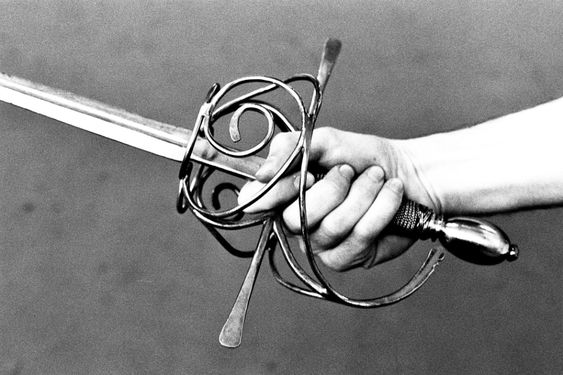
“Being undiplomatic (but more precise), I’d say he’s a pint-sized, pug-nosed, carrot-topped inadequate with a chip the size of Big Ben on his weedy shoulder. A sneer on legs. A malevolent buffoon. He’s too old to be any good with ghosts, but that doesn’t stop him from wearing the blingiest rapier you’ll ever see, weighed down to the pommel with cheap jewels.”
The Whispering Skull, page 18
Found on Pinterest
This passage conveys so much sass, so much, well, voice. It’s oozing with it. My sentence is, again, passible, but you’re given only the barest, most brittle of bones. With the passage written by Stroud, you get a marvelous idea of: what the narrator thinks of Kipps, where they are approximately, how Kipps looks, and wee bit of world building. This is essential to making a story stick with your reader; giving them something to hold on to on a molecular level.
Before this excerpt, there was a physical description of Kipps, but that paired with the voicy description of him brings up the saturation of the piece. Lucy — the narrator — is filling these pages to the brim with her personality, and everything is through Lucy-tinted lenses. The book would be extremely different if it were told through the eyes of another character. A little bit of Stroud shines through in his writing (naturally), but this is all Lucy.
Voice can be polarizing. The enjoyment of prose isn’t entirely dependent on how it was created, rather, the reader. The example I presented to you is right up my dry-humored alley, but you may have thought that Lucy was being too harsh, or think that my mish-mash of words is entirely unpleasant to the eye (in which case I don’t disagree).
When it teeters into “objectively” bad territory is when the voice overwhelms what’s trying to be said, or, it’s blandness seems to suck up color like a sponge. You don’t need to be weighing down your writing with cheap jewels. Think purple prose (where the prose is so outlandish and insubstantial it overwhelms the reader). You want to use voice to accentuate the characters, or bring the world to life. Author and YouTuber Alexa Donne made an excellent video entitled, “Writing With Voice — Does it Truly Matter?” where she goes into detail about how important it is to be a voicey writer in today’s writing climate.
There is also something called passive voice. Passive voice is when the subject of the sentence is standing by while the object of the sentence performs the work. This pertains more to my previous grammar section, but it fits snugly here.
“The chocolate cake was made by Sam.”
That’s an example of passive voice. The subject is Sam and the object is the chocolate cake.
You may hear advice that tells you to avoid passive voice. That’s because passive voice has a nasty tendency to be muddled and drags the sentence. It can be utilized tactfully when you want to make the sentence muggy (or other cases), otherwise, just use active voice.
Active voice is when the subject is acting upon the object.
“Sam was making the chocolate cake.”
Here’s an article you can read that goes into more detail about active and passive voice.
This a massive one for me — if I don’t enjoy reading about your characters, I won’t enjoy the story. Some readers love purposefully unlikeable characters (like Mr. Darcy), but all that backfires when it’s made apparent that this character was created to be likeable. This is evident in the way that other characters and story treats the protagonist: everything is too easy, they’re too well liked, or they act like an ass but no one does anything about it (but they can).
Let me introduce Mary Sue/Gary Sue. Mary Sues/Gary Sues are often overpowered, the world and other characters always bend to their will, and more often than not they’re beyond perfect. They lack a substantial personality, and most importantly, they hardly ever learn impactful lessons. These characters are plain annoying because they aren’t challenged in meaningful ways. Sure, a baddie may do a Bad Thing to them, but they always bounce back up like springs — never bothered and always winning.
Readers can’t empathize with these sorts of characters because they’re virtually flawless.
Crappy characters also appear when they aren’t fully developed. They can be unbalanced (ex: the hero without flaws, or the villian with no humanity at all), lack motivation, autonomy, or personality. No one wants to read about a potato sack being dragged around by the plot.
You can have a good set-up to a character, have them all lined up for a nice arc or what have you, but they never get fired off. Or, if they do, they’re a dud and land in the mud with a little splat. The main character(s) have to be dynamic, going from good to bad or vice versa is up to the writer, but they need to change in some way over the course of the story. If they don’t the reader is going to wonder what the point even was. Side characters need to be people in the sense they have their own lives, but they don’t need arcs all of the time. Pick and choose your battles because you don’t want to overwhelm your reader with too many moving parts.
They don’t always need to be good people or be the most well rounded, but they all need to have a point. Readers recognize pointless persons and they’re going to get bored.
There could be a lack of connectivity between the reader and character. Not every character you create needs to be adored by readers, nor does everyone need to have this deep connection with the fake people. But, there needs to be something there. That exact “something” isn’t for me to define. We all have read about characters that we just don’t give a shit about, find borning, etc.
If no one cares about the characters, they’re not going to care about the story. Simple as that. Character creation is complicated and I highly advise you to do further research. Here is a free MasterClass article entitled, “How to Develop Fictional Characters: 8 Tips for Character Development” to get you started.
Everything is moving at a gallop in the book, then everything stops for some info-dumping or a really windy dialogue scene. Or, we’re running at a breakneck speed and there’s no room to breathe. Pacing is one of the trickiest things to nail down with writing.
There’s two types of pacing, both of which play into each other. First, is line level pacing. This is when you have a super short, choppy sentence, or a sentence is long and windy such as this one. Massive blocks of text are an eyesore for me. No indentation? No em dashes or fun formatting? Come on.
The other type of pacing is the overarching one. This pertains to how bigger parts of the whole interact with one another. The length of a chapter, scene, and act/part. It’s the difference between the sprint that’s a battle scene, and the Sunday stroll that can be investigating clues for a mystery.
Here’s where it becomes a problem: When it takes too long to get to the point. Where we’re going scene after scene of just talking when this was supposed to be an action book. When it takes forever for obvious information to be revealed to the characters. When it feels like we’re just wandering around aimlessly looking for the plot. The reader could also be suffocated by how fast things are moving, and they can’t grow attached to the characters, or get invested in the story because everything is moving so fast.
Pacing is a delicate balancing act and one I’m not terribly familiar with. If you’re newer to the writing scene, don’t worry about this as much. But definitely do care. Take note of pacing in books you read, see when and why you’re growing bored, and all manner of different things. As always, do some further research.
One of my least favorite “harmless” tropes is the “very quirky and not like the others” kinds of characters. Ooh, they just annoy me to no end. You just really like comic books. Congrats. Don’t care.
A trope is something that is commonly used in genres (like a magic boarding school) and doesn’t necessarily have a negative connotation. A cliché is a trope that is overused and something most people are sick of seeing when not subverted (like some random kid stumbling into powers and becoming super powerful and is now adjacent to a god).
Anyhow, we all have those tropes that we could go on for ages about. Whenever they make a sudden appearance we roll our eyes or want to toss the book across the room. There is a time and place for all sorts of tropes and clichés, and just because one is being used that doesn’t mean it’s inherently cheap. I’m going to list some of the more vile ones out (in no particular order):
Pointless Racism, sexism (both ways), homophobia, transphobia, and ableism
Glorified abuser
Toxic Love triangle
The one useless best friend who’s only there to serve the protagonist
Sugarcoated relationship abuse
No one gets to be happy because this is dark and broody and super serious
Forced romance
Girl on girl hate for no better reason than to get the attention of a boy
A friendship must always turn into a romantic relationship
Men always have to fight each other and have sex because reasons
The female lead is a glorified sex object
Slut shaming
Fat shaming
The villainization of minority coded characters (LGBTQ+, people with mental or physical disabilities, people of color, and a whole host of others)
Stereotypes of minorities — especially racial
The savior complex
A character being outed for the sole sake of plot/the other person wants to be in a relationship
The glorification/downplay of sexual assault
I’m sure there’s so many that I’m forgetting. Now, these can be used if they’re utilized tactfully. They’re horrendous if it’s transparent that this is reflective of the author’s viewpoint, or there’s nothing counteracting these tropes, the characters don’t learn from these toxic viewpoints/actions, etc.
Here are some more commonly disliked tropes/clichés — though, these are far more subjective:
Chosen ones
“It was all a dream”
Here comes the calvary!
No communication whatsoever
The wise old person that always gets killed off (always)
Dead parents
Everybody has this terrible tragic past yet they don’t have any form of trauma
NO ONE GOES TO THERAPY NO ONE HAS TRUMA?? HOW? Y’ALL AREN’T OKAY
Bro I just met you but I’m so totally in love. Mm yes, true love.
Long, long descriptions of the characters examining themselves in the mirror
And you’re overpowered, and you’re over powered, and you’re overpowered, and…
This is how the human body works, oh yes, absolutely.
‘Yer a wizard Har—
Responses to my question of “What annoys you in books?” from my followers and friends on Instagram.
Obviously I’m a top psychologist in every field imaginable and know everything that has to do with humans. I’m just overqualified to speak on the human condition and why we do what we do.
Here’s what I think: when we notice faults in the prose, or we grow bored by the pacing, or any number of things I mentioned previously, we get taken out of the story. We’re reminded that this is all fiction and it ruins the flow.
We want to effortlessly be sucked into a new world filled with impossible scenarios and loveable characters, and when faulty writing interrupts, we lose that connection. This is especially true if it applies to published works that readers have paid for. With most online content, we’re more forgiving because we’re getting this for free and obviously it’s a work of passion.
Besides, mistakes can simply be annoying, and we don’t want to be annoyed while doing something pleasurable.
Being (presumably) human, we make mistakes; it’s inevitable. People aren’t expecting flawless work, but we do expect polished work — especially if we had to pay for it. I know I have made just about all of these mistakes in my own fictional work, but that’s okay.
If you think your writing is “bad”, that’s fine, but don’t let that stop you from trying to write and thus improving. If you think that your work is void of any mistakes whatsoever, then, well, I don’t know what to tell ya other than it isn’t as perfect as you think.
Naturally, all of these things have the possibility of being subjective, and what looks like a major flaw to me may not be a big deal to you. Taste exists.
Thank you for reading and I hope you get to have a buttery croissant later.
Please consider following this blog!
~ Jay
Oh dear, some of this advice is terrible! Nice blog btw 😀
[…] have a whole article detailing my experience with “write in your lane”, and in short, it made me (temporarily)…
[…] Write short fiction if you want to! I enjoy it because it breaks up the monotony of a novel.…
This is very true! They certainly aren’t harmless, and have proven to be quite the opposite, but I think it’s…
While the algorithms may not be “evil” or monstrous they are frequently full of biases that can have real impacts.…




 J. V. Montague
Oh dear, some of this advice is terrible! Nice blog btw 😀