Categories
Opinions

The worst writing advice I’ve heard

Some of these are outright awful and some of this advice is bad for me and my writing process. And of course, what didn’t work for me might work for you, and you might deem some of the poor advice listed here as perfectly useful. Whatever the case, I hope you enjoy it.

1: Don’t use exclamation marks because it makes your writing look “amateur”. 

This awful little nugget of advice is something I stumbled upon on YouTube and everyone in the comments was confused. I believe this was given in stylistic advice, but it was utterly baffling. In general, I’ve seen people advise to not use exclamation points because it seems juvenile (generally it’s used a lot in middle-grade and young adult fiction) and that they think that there are better ways of conveying excitement within the prose.

Exclamation points enhance what’s already there; the writing itself needs to clearly convey emotion—whether through word choice or other forms of punctuation. Do what you please when it comes to punctuating your prose. 

2: Outline all your scenes before writing them

This is a bad piece of advice for me specifically. Before I write a story I have no idea what themes, story elements, or ya know, plot, I want to explore, and while I can pull things out of thin air, it doesn’t always translate well to a strong story.

When I tried this method, I ended up creating a lot of scenes that were hollow and devoid of life. Part of the reason I felt this way was because it felt disingenuous to me. Generally, I come up with my best ideas as I write, but in editing, I need to make it cohesive and allow it to flow. I have to take all of my word-vomit ideas and put them into order—and you wouldn’t believe this—that forms what experts call a ‘plot’. I know, I know, I’m breaking new ground here. But doing all of that “prep” work before writing doesn’t bode well for personal engagement in what I write. However, I’m certain that this advice has helped tons of writers, and more power to you if you’re one of them.

3: You have to write (or master) short fiction before you can write novels

The idea behind this advice is to help wean new writers into longer-form content, and I can grasp the sentiment that one might need to build stamina before diving into a massive project. 

Here’s the thing: you learn to write novels by writing novels. You form the discipline and learn the craft by doing it. Training yourself to write short fiction in preparation for writing long fiction is going to make you write novels that feel like short stories. Short fiction and novels have different structures, guides for pacing, character development, focus, and so much more because they’re differing forms of art. 

Write short fiction if you want to! I enjoy it because it breaks up the monotony of a novel. I started writing novels long before I started experimenting with writing shorter fiction (I wrote my first book at fifteen, and I really started dabbling in short stories at sixteen), and that led to me writing short stories that are 13k words long

Altering this advice but maintaining its heart, I would say: break down your novel into smaller chunks—whether that be acts, chapters, or even scenes, and work out from there. In editing, you can make it connect and flow.

4: In order for it to be a satisfying story, your protagonist must have a positive arc

This is true for more traditional forms of storytelling, but so long as the character changes, or at the very least is challenged in a substantial way, your story is well on its way to being satisfying—just make sure to nail your ending.

5: Don’t use common tropes

This is a lot newer, and I completely understand where it’s coming from. Everyone loves to harp on the quaint farm boy who’s actually the long-lost Whatever for Wherever and has mystical powers beyond belief—that’s about as fresh as a pair of sweaty socks. Because of that, people want to see it look different somehow, go against the grain, or avoid it altogether. 

Common tropes are common for a reason. Don’t feel like you need to avoid them because they’re everywhere, instead, focus on your characters and making them interesting. I don’t hate the farm boy archetype (hell, I am the farm boy archetype), but make that powerful yet naive kid have depth and contradictions (easier said than done, I know). Or highlight the unique aspects of your world. Have a different story structure but follow the ideas of the chosen one trope.

I’m all for innovation and subversion within writing, but I do have an issue with writers feeling like something is “off-limits” because it’s “overdone”. 

6: Only write what you know

I have a whole article detailing my experience with “write in your lane”, and in short, it made me (temporarily) quit a project I adore. In modern times, this advice is given in the hopes of avoiding ill-informed writers talking about something that steps on the toes, or offends, marginalized voices. Absolutely, room (in terms of awareness and traditional publishing quotas) needs to be made for marginalized writers to publish books about issues that affect them and people like them. Yet, there isn’t a finite amount of space for books/stories to exist. This topic needs an in-depth post unto itself.

The advice I’m against here is that writers should only create characters or worlds based on their own experiences only for the sake of others. In writing outside of my experience, I’ve grown and learned so much—and I still have a ways to go. I’ve grown in my writing, yes, but I’ve grown as a person and in my knowledge of the world. 

Writing what you don’t know, and doing it well, forces you to improve in the same way that getting off the couch and exercising can help you build muscle. 

7: You must include diversity

I’ll make it simple: I’d rather not read a story with tokenism because the author felt that they needed to add diversity for brownie points. Representation matters, but proper representation is imperative.

8: “The only way to ___”

Generally, I have an issue with “The only way to” or “the best way to” statements. There is no one way to do something in art. There are general practices, like the three-act story structure, but you don’t have to adhere to them. Study them, understand why they work, and then make the decision of utilization. 


That’s all I have for right now. Some of these are a bit pettier while others are more serious, but I’ve heard a lot of advice in my time, and not all of it is great. I’m sure there’s more advice out there that’s less than ideal, and I might make another list in the future. Is there any writing advice that you think is crud? Let me know in the comments and I’d love to chat about it. 
Categories
fiction Short Fiction

The “Cursed” Amulet

A Misadventures of Montoya and Rose short story

“This is not the amulet, Rose,” Montoya hoists up a necklace with chunky turquoise beads and a centerpiece of a carved flat stone. “This is the amulet of protection,” he purses his lips, “if the name were to be directly translated…” 

Rose sniffs, crossing his sweaty arms. Around them, water drips from stalactites, and the hole they dropped down from allows some fresh air to permeate the muggy space. 

“Toya, why would they make it this damn difficult to get to if it weren’t the amulet?”

“For the same reason you make it so… difficult to get a straight answer out of you.” 

“Touché.”

“No, see, this can’t be the amulet…” Montoya holds it up to his face, and it gently sways back and forth. “It doesn’t add up—the records I looked into said it should be in a specialized area, like a throne room and this… is not…” He looks to Rose, who raises a barely visible eyebrow in response. “Besides, it’s not the right shape, or size, or… anything. And it was in the dirt! The dirt!”

“I was in the dirt and I’m still a prize.”

“That is what academics call, debatable. Now stop distracting me… there has to be a way to test it.” 

“Put it on.”

Montoya looks at Rose like he just insinuated that Montoya’s mother works at a brothel.

 “Dear God, no!”

“Why not? What is the worst it can do?”

“Do you want the list in numerical or alphabetical order?”

“It won’t kill you.”

“If you put it on, it certainly wouldn’t be me that’s dead.”

“It’s not my dirty necklace. Besides, if it were to curse anyone, it would be the man who touched it first and…” Rose whistles while pointing at his partner. “Go on, prove your absolute certainty it isn’t the amulet.”

“Why don’t you go and—” Montoya bites down on the last part of his sentence. With a flutter of a hand, Rose illustrates his point, then shifts on his feet. 

“No good archeologist would run around and place something around his neck; it would disrespect the culture the artifact originates from…” He chuckles and thrusts the amulet to Rose. “Good thing you’re a treasure hunter and never cared about such blights.”

“That was one time.”

“And what’s one more?” 

Looking as if he’s sucking on a lemon, Rose plucks the amulet from Montoya’s fingers, holds the necklace above his head, and makes noises that could possibly be classified as singing. Immediately after draping the necklace on, Rose collapses to the ground in a heap of sand. He lifts a pale hand as his eyes go wide. 

Goodbye, Toya,” he wheezes. 

Montoya puckers his lips and raises a single eyebrow. 

I’ve always loved yo—your eyebags.”

“That’s the only thing you love about me? Rude. Inconsiderate. Have you ever considered my flabby arms?”

Those, too, I guess.” 

Montoya crouches down, knees popping. “What about my sarcasm in French?” He tries to pull down Rose’s lifted arm to take his hand, but Rose twists out of his grip, and barrel rolls into him. Losing balance, Montoya topples to the ground. Rose keeps on rolling until he’s atop Montoya. 

I’m dying!” He yells. 

“Well you’re crushing me to death!Which by Montoya’s standards, is not the biggest exaggeration he’s made, seeing as the majority of Rose’s weight is on his torso. 

“I have to take you out somehow.

“Get,” Montoya presses his palm into Rose’s forehead, “off,” he shoves, “me,” he keeps pushing, but Rose just moves his head to the side. “Argh!” He pulls his hands away and Rose rests his cheek on Montoya’s chest.

“It’s nice to die in your flabby arms.”

At that, Montoya goes to slap the top of his head, but his hand bounces away without even touching Rose. That answers that question.

“The amulet works, you oaf. Now get off.”

Fine. But I had you convinced there for a second—don’t deny it, I saw the love in your eyes.” Rose rolls away and lays flat on his back, limbs spread out, grinning. Montoya’s expression mirrors his. 

Then it falls.

“So, uh, how do we get out of here?” Montoya asks. They both stare at the hole in the ceiling, then at the closed-off, empty chamber surrounding them. 

“Maybe we are dying.”

THE END

For now.

Categories
Personal

The Cost of Improvement

Recently, I made an Instagram post comparing my writing from 2019/2020, to 2022 to serve as encouragement, to show how I’ve gotten better, but it ended up making me melancholy. Objectively, I got better: my descriptions are more vivid, my dialogue has nuance, and my characters are deeper, yet something is missing. I improved, but at what cost?

My main project from 2019/2020 was titled Princiepoo Goes On an Adventure, and I had a notebook full of character art and planning I took with me everywhere. I blabbered on about it incessantly. Enamored with a world full of dragons, sand, and making fun of the fantasy plot of “Chosen One goes on an adventure to get McGuffin” that was all upside down. Talking about it now, after two years of letting the project collect dust, I’m getting excited. There was this element of puerile insanity; throwing spaghetti at the wall to see what stuck, no outline, no real plot, just my characters and the world that solidified under their feet. I was so excited to see where my bumpkins would lead me whenever I sat down to write. 

But now? God, everything is different now. Whenever I sit down to write I’m paralyzed with I need to make the dialogue flow better, need to make this work, need to make this look and read well so it’s easier to edit later. What is the character’s primary flaw? How is that impacting the scene? Question after question after question. I have a short story released, so I need to live up to that; be better than that. 

Between the two works, my passion for character remained consistent. I still blabber on about Montoya and Rose (2022 Project) as I did with Zain and Tau. It was Princiepoo that got me addicted to the foil pairing of straight man and jester, which is evident in The Misadventures of Montoya and Rose. But the passion is different. Now with TMOMAR, everything is set up for a goal, everything has to be checked through my knowledge of “good” writing. It’s like pulling teeth.

When I try to turn off Writer Brain™, and have fun with a scene, it inevitably switches back on and squats down. I reread what I wrote over and over, looking for ways to tighten up the prose. Back in 2019/2020, I didn’t care if it was good. Yes, I wanted to improve, but I knew that a project titled Prinicepoo Goes On an Adventure, wasn’t going to be the crème de la crème, so, anything worked. I was so free with my writing. 

I am my own issue. As I improved, learned more about the craft of writing, dabbled in teaching writing, thus creating standards for myself. It’s not good enough to simply have fun with something, it has to work. And in a slightly depressing, capitalistic way, I have to make it good so it can make money. It’s the mindset of if I do it right the first time, I can get it out sooner, set up my career early, and earn a coin. 

That’s fucked. 

These past few weeks I’ve felt so down on my work, nitpicking it, and borderline insulting it because it isn’t “good”. I can’t get the words to flow because I’m so anal-retentive about the words I am putting down being “good”. It has been a year since I started writing TMOMAR, and it has lost some of its luster; my ideas aren’t fresh and shiny anymore, they just need to be implemented. Some of this feeling can be attributed to the fact I’m on a second draft, a complete rewrite of the book, and with Princiepoo it was the first draft (though, I did get about 21k words deep). 

And I had to address the fact that I stopped working on Princiepoo. Why? I was moving on. I wanted to work on a more complex, more difficult thriller idea, that was gritty, and “cool”. Something challenging. The cutesy little adventure story wasn’t cutting it for me anymore, and I was losing interest. I wrote myself into corners, and I started needed to pull off the things I was setting up. 

Good job, kid. You grew up. Now what?

Now I need to go back and start working on things for myself, with no need of thinking about it getting published, worrying about it being good. Just cut some of the angst out of it and enjoy what’s left of my childhood. It’s important to strike a balance between taking a project seriously and having a dinky little side piece that serves no other purpose than to make me happy—that’s why I started writing in the first place.

“You’ve taught me how to bring happiness into my life, how to smile and see hope when all seems lost, you’ve guided me through the hardest trials. You’ve given me so, so much, and I can only hope that I’ve done the same for you.” Absolutely not, darling. How have we grown together? What the hell is she doing? None of this makes any fucking sense.

Princiepoo Goes On an Adventure
Categories
Book writing Personal

“Write in Your Lane” Made Me Quit My Series

Act 1

May 26, 2021, at three in the morning on a stormy night, lightning struck and I was lying awake in bed. Thunder boomed and my mind was alight with a new story. I had just started writing a Romcom, but this new idea was beyond alluring. It was of adventures and action, love and betrayal, and I was convinced it would be something grand. 

A simple scene came to mind; two men sitting in a train car, one white, the other brown, and they were in love, perhaps husbands. They didn’t have clear faces, but I had an idea of who they were. They were discussing their next big hit—a golden heart—while gazing out the window. There was a gold-tinted elegance to the scene, to the way they interacted, and I was mesmerized. 

The next day, before school started, I created a Google Doc jotting down all my ideas for the story. The first thing that always comes to me are the characters, so I made an extensive bullet point list for what would become Montoya and Rose. 

The fundamental ideas haven’t changed since May: The Misadventures of Montoya and Rose or “TMOMAR” takes place in the 1920s where an archeologist, Montoya, and a scammer, Richard Rose, hunt down mystical artifacts. Reminiscent of Indiana Jones and The Mummy TMOMAR is a story meant to be brimming with action, adventure, and magic. 

I never had a particular reason for making Montoya Indian (hailing from India), that is simply how I envisioned him. Much like how I always envisioned Rose as white and redheaded. I wanted Montoya to be the main character because I liked how composed, intelligent, and well-researched he is. I also noted how in many of the inspirations listed above, many of them don’t feature a POC as the main character, and I just… wanted to. Not because I thought I would be some sort of a savior, but because I like how Montoya is, I want him as the lead, and I don’t see it all that often. 

The development for the story continued on unbothered for some time. I submitted the first chapter for a creative writing class in April (I got an 80 on it), and went to work. 

Then, I discovered a YouTube show that would alter my perspective and inadvertently lead to the death of TMOMAR.


Act 2

Book CommuniTEA” is a YouTube series created by Jess Owens discussing the “goings on in the bookish community”. Owens goes into depth about the drama and discussions floating around on bookish Twitter and gives her opinions on the matter.

I fell into the series because the videos are long enough for me to listen to while I got ready for school, and because I enjoyed (and still do enjoy) Owens’ wit and perspective on the drama. I watched those videos every day and I noticed a shift in how I was thinking. 

Before I continue on, while Book CommuniTEA was very influential, I am in no way blaming Owens for what happened, nor do I think it’s her fault. I was, and still am, an easily influenced teenager, and it could have been any kind of series that led me to think in the manner in which I did. 

Through Book CommuniTEA, I was beginning to deeply think about the perspectives of the POV voices on Twitter about representation in literature. I was introduced to the idea that a white (cis-gendered, straight, able-bodied, etc) writer should “stay in their lane” and “write what they know”. To be clear, these are not necessarily the opinions of Owens, rather, these were the opinions of nameless Twitter users that she was reading off of. 

From there I learned more about the #ownvoices movement in traditional publishing; the idea that more stories about minorities should be published by people in that minority group. Since its origin in 2015, the movement has come under harsh criticism for not holding up to scrutiny. If you want to learn more about this subject matter, I recommend watching Rachel Writes’ video “Writing Diversely & the problem with ‘staying in your lane’”. 

At this point, TMOMAR was trucking along, and I started doing research for it (up until that point it was primarily character and plot building). I learned about the deep-rooted discrimination against Asian people by the United States, and I was in shock. I was not aware that they were not allowed to be naturalized citizens until the 1960’s, and less so about the numerous bans against them. My American schooling never taught me about the dehumanization of Asian people in my own country. I found out about it from a Young Adult book, not a textbook. This set me off, but it also filled me with guilt.

How was I so unaware of this? I felt cheated by my school system, but I felt awful about myself for not knowing such a dark and massive part about history. For what felt like for the first time in my life, I was made painfully aware of my privilege as a white person; I could easily live my life not knowing because American society has constructed itself in such a way where I didn’t need to know.

This altered not only my worldview but how I saw TMOMAR. I thought, how can I write a story set in the 1920s and not talk about this? Montoya would constantly be faced with horrible, blatant racism because he’s Indian. While I was aware of the racism of the 20s, and while I assumed that Montoya would be treated worse than his white counterparts, this was more specific, it was more informed. 

This is where I started thinking that I needed to write a trauma story. This is where everything went horribly wrong. From my (limited) knowledge of a sensitive topic, I assumed that I needed to hyperfocus on that sensitive topic in order to tell the story I wanted to tell. TMOMAR shifted from being an adventure story—something well within “my lane” to write—into a story I had (and still don’t have) the qualifications to write. 

Why did I feel I needed to change TMOMAR? 

I didn’t want to write a novel set in the past and ignore the issues that the 20s had. I wanted to stay true to the era and not glorify it.

But there’s magic in that world. Naturally, I was very closely adhering to reality.

It was a vain attempt to do what my predecessors in this genre (to my knowledge at the time) didn’t do. It was to be sensitive to Asian and Indian people who lived in the United States at that time. 

Then the misguided puzzle pieces were forced together. 


Act 3

I was beginning to “write outside my lane”. 

If TMOMAR is set in the 1920s, it follows a POC protagonist, and because of that I have to focus on the racism and discrimination that he would face, but I’m white, therefore, I cannot write that story. 

“Part of the issue for me was not seeing Montoya beyond his race.” I said in a video I posted to Instagram on this subject.

All the voices and opinions of strangers swirled around in my head, and I took the bits and pieces of their narrative and constructed one of my own. I was terrified to “write outside my lane” and risk hurting people. But no one in my actual life told me to quit. No one that knew me supported these ideas. Everyone I talked to about this was kind and supportive, and they offered fantastic advice.

And that’s where the majority of fear stemmed: not wanting to hurt others. 

One of the things talked about in Book CommuniTEA is how well-intentioned white (among other things) authors missed the mark in trying to tell a diverse story. I thought that it would be better for me to not write the story at all than to miss the mark, hurt others, and be a “bad” person. I felt I had to give up the story because I was afraid of the research necessary in order to tell that version of TMOMAR well. But even then, I had a defeatist attitude. 

I decided the best thing for me to do was to quit.

On social media and with my friends I didn’t dive into the racial component of this decision because I didn’t feel comfortable talking about it. Plus, the fact that I was terrified of the mountain of research that needed to be done and the general mounting fear of the project were enough reasons for me to quit.

I fell into a mourning period. At that point, I had spent three months of my life growing attached to my characters, their story, and all the little things associated with them. When I caught myself listening to a song and thinking that’s something Montoya would enjoy I would mentally slap myself on the wrist. 

Around that time I also fell into my worst writing slump to date—but there were many, many factors leading to that. I felt worthless in my writing and by extension, myself. 

About a month later, I was tired of listening to the same sort of music I had been listening to and decided to poke around on the abandoned TMOMAR playlist. In an instant, all the ideas, the hope, the adoration for The Misadventures of Montoya and Rose flashed before me. All of the reasons I started writing that story to begin with. All the reasons I fell in love with it.

Because of the time I spent away from it, I realized that what I thought about wasn’t making it realistic, it was putting the ‘fiction’ in ‘historical fiction’. TMOMAR didn’t need to be focused on the horrible bits of the 20s because that’s not what it was about. There is enough room for me to understand and acknowledge the racism of the 1920s while not fixating on it.

This is what my friends were telling me all along. 

I treated TMOMAR like some ground-breaking literary novel about the nuances of racism and placed that weight onto my weak shoulders. And I collapsed. 


Epilogue

TMOMAR has not been easy to write, but I have loved each and every moment of it. I have a lot of research ahead of me, and I always will, but I’ve been chipping away at it. When the first book is readable, I’ll hire sensitivity readers to help me fill in the gaps and make sure the book isn’t being offensive with its portrayal of Montoya and other POC characters. I’ll make sure to respectfully ask people questions. I’ll do all that I can so that TMOMAR can properly convey what it’s supposed to be: an adventure story with larger-than-life characters and magic. 

To a certain extent, Past Jay was correct in not wanting to write outside his lane. I think in some ways, it prevented a catastrophe of a book, and in others, it stifled creativity. “Write in your lane” and the ideas behind it are so complex and nuanced that I can’t cover it in this post. 

It has been a long journey to come where I am now, and I don’t see it ending any time soon. However, I am passionate about my story and my characters and I’m willing to learn. And right now, that’s all I can hope to do.

Categories
Opinions Writing in General

Interview With Anon: An Honest Critique of Writergram

For quite some time, in the Instagram writing community there has been a discussion about repetition within the space, or issues it has. I got into contact with Anon after he interacted with my “Is Writergram repetitive?” story (March 20). He provided a very interesting response and I wanted him to expand upon his initial response.

The interview was conducted over Instagram DMs between March 21-24, 2022. This is the uncut version, with minor edits made for grammar, readability, or formatting. No hate or disrespect will be directed to the interviewee, who wishes to remain anonymous.

A note for those unfamiliar with the term “writergram”: “Writergram” refers to a niche community on Instagram focused on writing advice, sharing information about original content, and generally fixates on genre fiction. The community primarily consists of young adults and teens.


Q: You mentioned in your original response to my question box that you find the jokes on Writergram repetitive and not relatable. Could you expand on that thought?

A: So I’m in a very different spot than most of the writers here. I haven’t been writing since childhood, only for about 3 years now. I didn’t grow up reading a lot of fiction. The odd novel here and there but mostly books on science, space and dinosaurs. All of writergrams favourite books I’ve never read. Never read [Harry Potter] or [Percy Jackson]. Hell, I had never even HEARD of [Shadow & Bone] until the community had a collective aneurysm to Netflix announcement. So I’m already not relating to most experiences on here. But I think the biggest differences between them and me is due to theatre and fandom. I was a fan of things that did have fandoms (Gravity Falls, Pokémon, Musicals) but I never got involved with fandom (probably because of the mindset of constant internet stranger danger). And I know fandom is linked with fanfiction (and general YA fiction), and that has a lot of emphasis on tropes. That’s where the trouble starts. I’ll say: it don’t get tropes. I don’t care for them. I don’t go looking for them.

I don’t have strong opinions on any of them. And it’s not made better by the fact that theatre does have tropes, they’re not consistent across all the very diverse styles. Or maybe they are, but I just don’t care for them so I don’t notice them. Maybe you can put this together yourself, but when two people have completely different experiences and opinions with stories, and don’t consume same media, or if you do it’s not in the same way, they’re gonna be feeling awkward around each other. I have felt like a bit of an outsider in the community. I remember being jealous of accounts that got a “new writer alert” surprise that got them 200 followers in on days when it took me over a year to reach 100. And when you’re passively alienated like this, Bertolt Brecht starts making a lot more sense. I started looking at these posts and I noticed repetitions in posts, reels, general styles, etc.

Here are some ones I can name off the top of my head include:

  • Dialogue tags
  •  How to write X group/trope -“I kill/traumatise my characters” 
  • “I don’t get sleep lmao” 
  • The writing community needs to stop romanticising not sleeping”
  •  Taylor Swift is God -Fantasy/YA romance are the only books that exist
  •  Marvel movies are the movies to exist
  •  “When X trope does this, I go *keyboard smash*” 
  • Enemies to Lovers, Found Family, Morally grey characters and arson are the only tropes in existence

I’m stopping myself there because I may go into full blown rambling. But I don’t relate to any of these. And so when you see these things over again and you aren’t caught up in the emotion of “speaking the truth” per se, you get a little bit… desensitised. Oh and also not obsessively in love with characters, my own or some from a some piece of media.


Q: Are there other fundamental things that you think the writergram community needs to improve upon? Why?

A: I’m scared this part may make me sound like an asshole but I can’t put it any other way. Okay one thing nags me about the whole thing with likes going down is that I see stories like “my likes used to be 900 now they’re at 700” and I’m like “listen, I’m sorry that a solid proportion of your followers probably are no longer seeing your posts, that’s sad I’ll admit. At the same time, can’t relate. I max out at like 25 likes and like 6 of them are probably spam bots” I say this makes me sound like an asshole because I understand that just because someone has it worse than you doesn’t mean your feelings are invalid. That’s true here. And I can also say that I have felt the same thing when my likes on a post are lower than usual. And I have to knock myself into shape by telling myself “shut up. You make good content. This is not a reflection of your ability” or something [I don’t know], I forget about posting for too many days so it’s not really a big deal for me.

But it’s a definitely not a good thing, and not unique to this community. The fact is: when something meant for escapism and fun from normal human shit, making about getting approval from strangers, and making gaining that approval a labour. That’s not good, and drains the fun. I’m not saying it’s easy to get out of the social media creator mindset, but at least make an effort. If you react poorly, just figure why you did and correct yourself. The only person punish you is you. So just take a fucking chill pill and make something fun.

The fact is: when something meant for escapism and fun from normal human shit, making about getting approval from strangers, and making gaining that approval a labour.


Q: In your opinion, what do you think are some ways to break out of this rut the writing community may (or may not) be in?

A: Well to know how to stop something, you have to know why it happened. And that’s difficult in this situation. Obviously the algorithm exists and there’s not much we can do about that except gain it. Really social media accounts are just businesses that replaced money with approval. So apologies but I’m about revert to my less than a year’s worth of A-Level Business Studies to try and answer this. Profit is made when supply a demand. Simply, the demand for what the community has been putting out was at a high, and has now dropped. People want something else that the community isn’t supplying, so they’re not buying. So what has been buying? Well my evidence is based on an unreliable sample and anecdotal evidence but I’d say we’re moving in a more story-specific direction. I’ve posts about asking your [original characters]s questions and how to write certain characters flop, while posts about writing X story do very well. That’s why trope based jokes are doing well.

Back when lockdown started and went hard on us, making posts on the little imaginary people we made up to talk to and project all the things we could if only we could go outside was fun and needed. But now a lot of things have eased up, and now you can do the things you wanted. Instead of vining with situations from incorrect quotes, you now have to make something worth telling. Worth doing. Story is replacing character as the big discussion point, and we need to supply the demand.


Q:  What would you like to see more of in the writing community?

A: I do want more discussion of themes and intention behind stories. I’ve never found those epic plot descriptions in trailers that are like “would you read a story about an assassin who fights the evil Queen and falls in the royal mage”. Idk I feel like that’s a mad libs challenge with the blanks filled. Just makes sure it’s YA Fantasy with a mix of passionate romance and high tragedy. But I want to know what this story is putting out into the world. I love when a story teases what its underlying themes. Example: People, Places and Things by Duncan MacMillan: “When intoxication feels like the only way to survive the modern world, how can she ever sober up?” I read that, I know I’m going to think about something, rather than just blindly feel.


 Q: What would you like to see less of in the writing community?

A: I know this is the internet, and what I ask for is very unlikely to come about, but I would like to see less absolutes. More nuance. Recently, after I answered the first batch of questions, I post my explore page that was very absolute about a method on improving dialogue. And, as someone who writes a lot of dialogue, I both understand the point and also think it completely missed the mark. A solid amount of advice is “always/never do this” when a lot more of it should be “if you’re going to do this, understand this/look out for this/do this as well/etc”. No method is going to work for everyone. They all have their pros and cons. Like IRL tools, every tip is best used when you know how use them and what they do. I feel like some of that is missing (probably in myself as well).


Q: Why do you think the writing community is prone to repetition?

A: Simple. It’s the reason most things are repetitive and don’t change. It’s just comfy where we are, for both creators and consumers. As creators, we’re still getting the positive feedback in the form of likes and comments. Whenever we make a character death joke, we know people will relate to them but we mix it up just a little bit by using the one TikTok audio that’s popular [right now]. Whenever we try something more experimental, it flops. That’s our sign to never leave our comfort zone again. As consumers, when we see something we already recognise, there’s the relief of risk. “That’s the classic writing community again” we say as we get a small blip of nice brain chemicals. When we something new, it’s off-putting. “We’ve gathered here because of our shared taste sense of humour. What is this new thing? It’s not what I thought you were”. This happens in business and in friendship. Companies releasing a slightly different version of the same product everytime.

And we do it with our friends. We tell the same jokes to keep them around. And what if that friend does something completely unexpected of them? How does that change how you see them. (Yasmina Reza’s “Art” is [a] great play about exactly this).


Q: Are there ideas (within craft, tropes, characters, etc.) that you think writergram is misrepresenting?

A: I guess I’ll say that realism, as opposed to escapism, needs to be re-understood. Like, I get it. Escapism isn’t just fun, it’s a necessity. I even have a side [work in progress] about a teen’s mental health going down the drain giving up her escape in order to pursue success. But what I’m getting at is that escapism is perfect and realism is not to be touched. It’s a sentiment not explicitly stated, but it’s more subtly, likely unintentionally, implied. Everything about character and plot and tropes is to project and stuff. I’m not with that. Realism gets you thinking about yourself, the people around you, the whole world around you. And I know the world is scary, but the first step to fixing it is to think about it. Generally, I think we need a mix of realism and escapism in our lives, and I’m just getting the sense that it’s tilting a bit too far in one direction. I legitimately once saw someone ask for book recs, but added “I only read fantasy” and threw me way off?

Like, I’d never think a fantasy writer could be so unimaginative. Do you know how limiting that is? As a reader and a writer? That you could miss out on your new favourite book, or an entirely new trope to add to your book because you’re so conservative with your tastes. Honestly I could never.

Realism gets you thinking about yourself, the people around you, the whole world around you. And I know the world is scary, but the first step to fixing it is to think about it.


Q: Are there other things that you would like to talk about that I didn’t bring up so far in the interview?

A: Just know I don’t hate the writing community. I’m not here to spread drama, despite being a drama student. And even if it was, strangely I think it would have benefits. I’ve never seen the community interact with each other more with each other than when a drama shakes it. That’s with every community, but still applies. If anything, what I hope to accomplish with all this word vomit is to get people to think about the community. Think about why they’re doing what they’re doing. Think about how long they can keep it up. And think about what they could change. Because as storytellers, change is what we’re all about.

Categories
Uncategorized

Dear Reader,

We are in a graveyard. My posts sit under the shade of ancient willow trees, freezing to the touch. Sometimes I wander about, making promises to tend to the weeds, to make things better, to return more often.

There are always reasons and excuses and words—so many words—I can use to explain. You know. You understand. I can say that I’ll be better, there will be more posts but we’re tired of those promises. 

I will plant more graves and pull spiderwebs from the tree limbs. The gates are open, you can leave, but I remain. I’ll stretch my legs. I look back at the person who created this place and smile at his ambition. I’ll hum and invite the others to come, but this is my home, and I am determined to keep it. 

Thank you for visiting; thank you for your time. You are lovely and you deserve all the best, and never let them tell you otherwise. 

Sincerely,

Montague

Categories
Opinions

The Algorithm Isn’t a Monster.

Besides the same four jokes, one thing has been very consistent about Writergram: the lamenting about the algorithm. QOTD (Question of the day), “engagement slides” on stories, complaining about “flopping posts”, and general frustration with Instagram. Some users have adapted to posting a lot of reels, others have stuck stubbornly within pictures (like myself), and we all feel that pang of ah, shit when people don’t interact with our posts. It’s human. However, we’re missing the point.

A note for those unfamiliar with Instagram jargon: when a post “flops” it means it doesn’t do as well compared to the other content a creater has posted. “Engagement slides” are when, on stories, creators try to boost their activity, and thus their reach by adding a lot of interactive elements to a story. QOTD is another way that creators try to get engagement on posts by having their followers answer the “question of the day”.

Another note: “Writergram” is a community on Instagram that primarily consists of teenage writers, authors, or aspiring authors. You can typically find it by searching under the hashtag #teenwritercommunity

Instagram

Note: since writing this article, there has been a minor update to Instagram that allows users to filter who they see on their home feed. This has bolstered activity and interaction somewhat.

In June of 2021, the head of Instagram stated that “Instagram is no longer a photo-sharing app”. In Andy Day’s article on Fstoppers titled “If Instagram is no longer a photo-sharing app should we use Twitter instead?”, he states, “Instagram is and has always been a social media app […] Given that social media is in a constant state of evolution, Instagram’s announcement is no surprise […]” Change is to be expected and priorities are going to shift, whether or not online communities like it or not. Written on Instagram’s official blog in June of last year, Adam Mosseri, head of Instagram, says that it is not running on a singular algorithm (The Algorithm) but rather an amalgamation of “algorithms, classifiers, and processes” each tailored to different branches of the app (home, explore, reels, etc.) Interestingly, there are also things called “signals” that are used; acute information from a post, like the time of posting, who it is that posted (and the patterns of their activity), how much you have interacted with the poster, and a thousand other little things that make up what does and doesn’t get shown to you. Seriously, if you want to get a treasure trove of information about Instagram’s mechanics, read “Shedding More Light On Instagram’s Algorithm” by Adam Mosseri on about.instagram.com. In short, Instagram’s main goal is to keep you on the app, not to make you grow. 

But that previous paragraph focused more so on Feed and Stories, not on the explore page. Officially, from Mosseri’s post, he writes that Explore is tailored by what your mutuals interact with, content that’s similar to what you interact with previously on the Explore page, trial and error, and what you manually flag. As it is written in the blog, Mosseri makes it seem like smaller creators are going to make it to your explore when, from my anecdotal experience, that is not always the case. The majority of posts that I see on the Explore page have thousands of likes—which in the context of Instagram, makes sense: more people like this, so it’s more likely you will as well. Since I like those posts, I feed into the cycle. However, you can dig into little niches, and access less popular posts, by clicking labeled buttons on the top of the screen. That will lead to more specialized content with a healthy mix of popular posts (over 1k likes) and less popular posts (under 1k likes). Explore is designed to get different content out to you, and since more popular content is more likely to be liked, it’s pushed into your main feed, but “unpopular” posts are easily accessible—especially under hashtags, it just takes more effort to access. 

Writergram is a piece of driftwood out in the sea; it is by our very nature we’re going to struggle to get explore page favor, or much favor at all. Bigger accounts, obviously, are going to be pushed more. Notably, “Writing account farms”, or accounts that exclusively repost content from other sites multiple times a day, are going to be getting more favor than accounts such as mine. Why? Here are some main factors I have seen that lead to the success of writing accounts:

  1. Easy to consume content. Memes, simple graphics of writing advice, reposts from Tumblr, reposts of Tweets, etc. Most users are not interested in engaging with long posts (like this one); content about characters, world-building, anything particularly niche about an unpublished story because it takes effort to gain context for the posts, it takes time for a follower to create a connection to the creator and their work, and because it’s ultra-specific (note that this is shifting).
  2. Frequent posting. Daily, or even more than once a day. It gives more recent content for Instagram to push (if it deems the user interested in such posts). However, balance is key because if one posts too much and there is little interaction, Instagram is still going to bury posts in favor of promoting more relevant content.
  3. Shout-outs. In a tiny community frequent shouting out is a manual way to push users and people tend to be more receptive to it. 
  4. Aesthetics. The emphasis is placed on pretty posts with loopy font and heavy editing, and also on easy-to-read text. This can be seen in every facet of Instagram.
  5. Trends. Within content format (e.g. using Twitter screenshot posts), in what topics are covered (e.g. morally grey villains; show don’t tell), within reels (e.g. audio from TikTok)

Me, Myself, and I

Coming back from a hiatus, I know that my posts are less likely to be pushed to my followers, fewer people are going to check my stories, and it’s going to take some time to get back “on track”; but here’s the thing: does it matter?

In some ways, it does. That sweet, sweet reward system in my mind is going to ping when I hit over 100 likes. I’m going to feel like I’m a “real” creator and “worthy” of my 1k followers (thank all of you so much for that), and what I put out will feel like it holds weight. I’m not just shouting into the void. It feels nice to be seen and appreciated for my hard work. Validation is one hell of a drug.

But in letting monkey brain take over, I lose sight of the impact outside the rat race. Not too long ago I was feeling down about my account and I confided in one of my closest (online) friends about it. They told me that while they were in class, Writergram came up, and apparently, so did one of my posts. It broke my brain. Social media has so thoroughly conditioned me into seeing numbers that I’ve forgotten how there are human beings behind Instagram’s numerics. People, no matter if it’s 10 or 1,000, have seen my creation long enough to give it a like or to leave a comment—the smaller number of bots aside. That’s incredible! It’s why I should be doing what I do: to create a connection.

 Breaks can’t provide perspective when processes aren’t analyzed and motivations aren’t challenged. Writing this post allowed me to realize that the Instagram algorithm isn’t a monster. It simply is. And my chasing after external validation isn’t the fault of Instagram by itself; when it comes to things like body image, the way in which that platform works can be damaging, but in this context, that is not the case.

So, what?

The Algorithm isn’t trying to kill your account. It’s not a massive fog looming over your posts. It’s not the reason you (might) feel shitty. It takes time to unlearn the mindset of “interaction=success” and feeling the need for external validation. You and your content are enough so long as you are proud. Even though it may feel like it at times, the effort you put into what you create is never wasted no matter external validation. If you want to hit it big, do the things I outlined above for favorable interaction. But don’t overlook the benefits of growing slowly: you tend to make deeper connections with your followers, thus, creating a more tight-knit community; you don’t have to worry about maintaining trends so you can create what you love. 

It’s easy to place the blame onto an entity of sorts, but it’s doing what it’s designed to do: get you to stay on the app. The people who interact with your account the most are going to see what you put out, and the others? Well, that isn’t in your control. In the words of an over-used song from 2013, “let it go”. Acknowledge the sting of inactivity, feel it, and release it. Then, channel your energy into creating what you love and chatting with the people you care about.

Categories
Personal Rambles

Did I meet my writing goals for 2021?

I did not meet half of my writing goals for 2021. As a quick recap, my goals were:

  1. Release a series of short stories
  2. Revise the novel I was working on at the time/learn how to revise a novel
  3. Learn how to work with beta readers
  4. Publish

Looking back at that old blog post, one of my biggest goals should’ve been to work on my non-fiction writing because sheesh. Anyhow, I’m sitting at a 2/4 for those writing goals.

Could be worse.

1: Release a series of short stories

This goal was about a series of short stories I was working on and planned on releasing in June. I stopped cold turkey in March and I haven’t touched it since. My dream was releasing this series on a semi-regular basis, amass a crowd of adoring fans, become famous, etc. 

Releasing that series wasn’t a bad goal on its own, but my writing priorities shifted and I hit a bad burnout over the summer. A new idea, The Misadventures of Montoya and Rose, caught my eye and I was a goner ever since. 

I think the main reason I didn’t complete this goal was that I wasn’t married to the idea. It would’ve taken a massive amount of time to complete, and that’s time I’m not interested in investing. Though, it’s good that I gave it a go because it expanded my horizons when it comes to fiction writing.

Just so you never ask me to release the full thing, here is an excerpt of what I was working on: 

The plan would be going forth that fateful night. 

Summer has long since passed. Now, under the glow of a crescent moon, the grass is brown and frost-bitten. The bare trees sway with the chilling wind, and hearths need to be more attended to.

The wind pushes against the window of the Estate owner’s daughter, Ada. It whistles through the small gaps and creates a small draft. She shivers, pulling the thick, woolly blankets up to her chin.

Her fireplace is a void in her wall. She closes her eyes and pretends that this winter is like the last one. But she feels the gown staring at her.

January 2021

(Side note, it’s so odd to read what I wrote a year ago. If I doubt if I’ve improved, I’ll reread what I wrote back then).

2: Learn how to revise a novel/revise the novel I was working on at the time

I think I know what novel I was talking about in the original post, but Past Jay felt the need to be secretive and not reveal what genre it was. Past Jay could’ve been referring to the novel I was drafting over winter break, a thriller derived from the first book I wrote, but I’m not sure. Whatever the case, I have not revised a novel this year. I so thoroughly failed that specific goal that I wrote two books in 2021. Revised none of them.

I only know how to revise a novel in theory because all of my first drafts have been so utterly broken that the only way to salvage them is to go in with a rewrite. Both times. 

3: Learn how to work with beta readers

I actually did this one! Huzzah! When I wrote my short story, The Stolen Dagger, I enlisted the help of six beta readers to get feedback on my work. It was confusing. I don’t know why, but I expected the process to be easier than it was. Maybe the stress got to me, maybe it was my inexperience. Whatever the case, it was a confusing process to evaluate what everyone was telling me. 

I have so much more to learn about the beta reader process that even though I’m marking this goal as completed, it’s only partially so. 

4: Publish

I fully completed this one. After the falling out of my short story series, I gave up on publishing. Then something in me broke in this past month and I went all-in. The journey to publishing was wild and extremely short, and if you want to know what it was like, you can read about it here

Conclusion

I’ve made so much progress in this past year that it doesn’t matter if I met all of the goals I set in 2020. I learned how to write essays, I stayed consistent with my social media and managed to hit 1k followers on Instagram, I wrote two books, and I published! While I have goals for 2022, big ones at that, I have no intention of sharing them publicly. I’ll probably make a post like this a year from now and evaluate my progress. I know I’m incredible and I’m proud of the work I’ve done, and that’s what matters now, and a year into the future. 

Categories
Personal Rambles

I stop writing when I’m forced to

I never rest with my creative projects until I am forced to. My creativity, motivation, and mental health tend to take a dive before I take a break. 

That’s not a good thing.

It’s not that I don’t understand the importance of rest, I absolutely do, but my mind doesn’t quiet when ask it to (creatively speaking). Then, when I get fired up to work on another project since it seemed that it’s time to get a move on, it checks out. Part of the issue is I don’t feel like a whole person when I’m not writing. Hell, at the time of drafting this post, that’s where I’m at. 

I don’t know what to do. I could read. But I’m always doing that. Watch a show? Work on another project? All of these scattered questions rise in my mind and I end up feeling worse about myself and my writing because of them. 

I’m a teenager and don’t yet have a fully developed brain or a true sense of self. I have assigned my identity to work, and when I need to take a break from that, it’s like I’m flung out into the freezing ocean. It’s not that I’m Jay, it’s that I’m an Author, a Writer, a Creator. Everything I am is wrapped up in words. Everything I am is tangled in my creations. And when those things start sucking the life out of me because I am Human, I shortcircuit. The vibrant colors of lies fade away and I’m left with the faded, gritty truth of: 

I have no clue who I am. 

Where do I go from here? What are the solutions to my problems? The people I’ve talked to about this told me to set a small goal that centers around enjoyment; essentially, distract myself like throwing a toy for a dog. Make it a goal to watch an episode of a TV show or read a chapter of a book. Let it be a game. Sometimes it works, often it doesn’t. I suck myself back into the over-working cycle due to a lack of self-discipline, then when burnout threatens, I dash away and hold out a cross to it as if it’s a demon.

I know I’m not the only creative person who has struggled with this, but I haven’t seen anyone in my spheres talk about it. It seems like everyone has it figured out until burnout strikes, then, we can only start writing when we’re forced to.

Categories
Personal

Publishing Panic

I fall off the face of the Earth, then I crop back up again like nothing ever happened. Typical. Well, I’ve debuted! I’m now an ‘official’ author, doing official author things (like procrastinating on updating this site again).

What have I debuted?

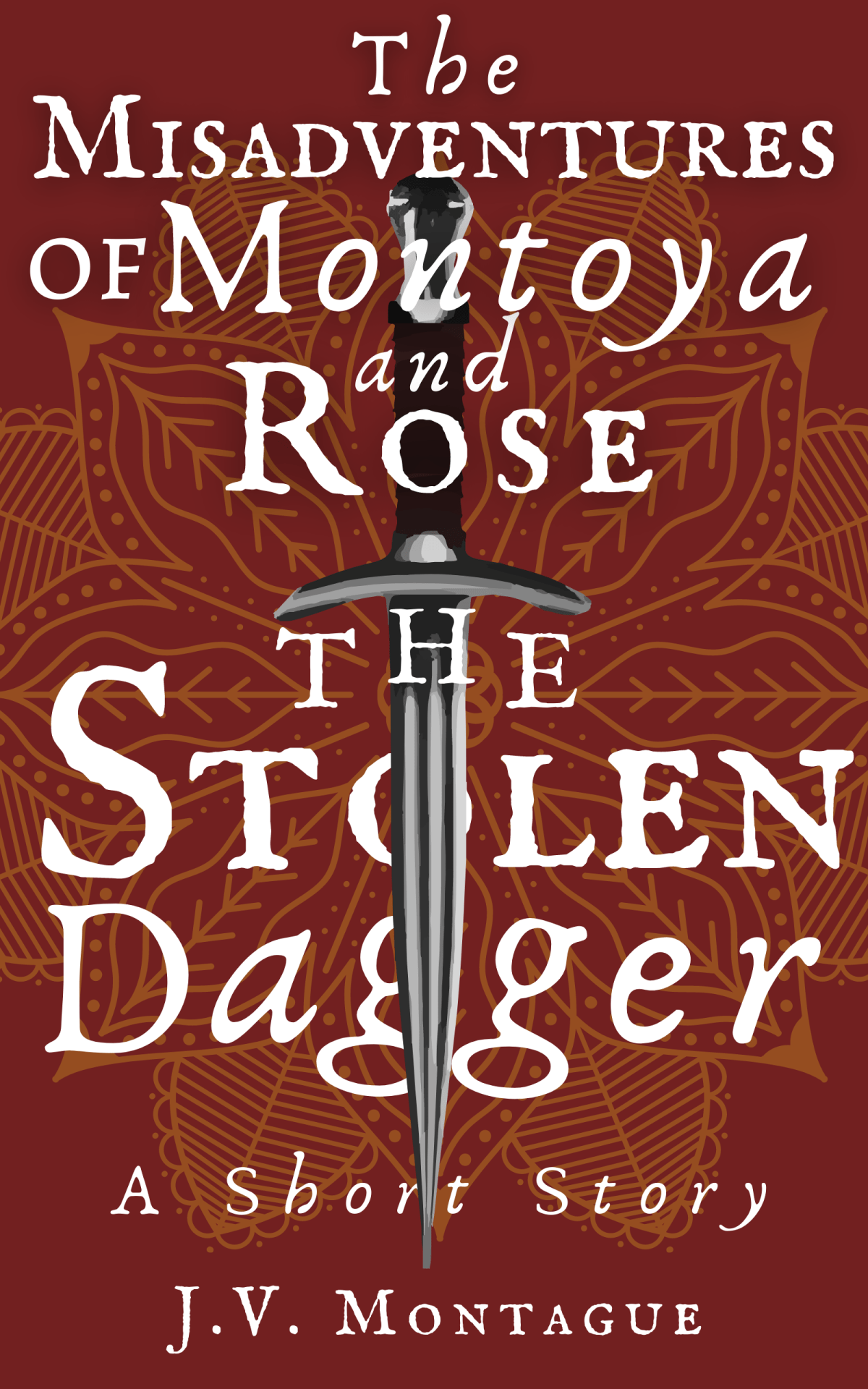
On December 17, I released The Stolen Dagger, a short story that follows Montoya and Rose, two adventures, as they spend the holidays at home. Here is the blurb:

December 1920

After their first adventure of getting the Golden Heart, Montoya and Rose are ready for a quiet Christmas back home, in New York. Montoya invites Rose to his family’s estate to spend their first holidays together. But Rose and the Estate have many secrets up their sleeves–secrets that will destroy Montoya and his family. Friendships are tested and trust goes up in flames as gunshots ring through the air like sleigh bells.

The Stolen Dagger is a short story that follows the events of The Golden Heart, but stands on its own as a story.

The Misadventures of Montoya and Rose is perfect for fans of Indiana Jones and The Mummy.

If you’re interested in reading it yourself, you check check it out on Amazon here, and you can add it to GoodReads here.


So… where is The Golden Heart if this story follows that book? It’s uh, it’s in the works.

Then why release a short story that follows the events of The Golden Heart if The Golden Heart isn’t even released yet? Because I wanted to.

Absolutely fantastic marketing strategy, I know. However, they’re disconnected enough to where they stand on their own as narratives, and while there are references to The Golden Heart in The Stolen Dagger, you don’t need to have read The Golden Heart in order to understand the short story.

The Story Behind the Story

It was November 27, 2021, and I was possessed by the Christmas spirit (sounds rather violent when you phrase it that way), and I wanted to write a short story surrounding my beloved characters. I posted a poll on Instagram asking if people wanted to read it, and it was a 100% poll on ‘yes’.

Initially I anticipated the short story to be nothing more than 3k words and something I could post here. Low steaks, something fun, nothing big.

Wrong.

As I wrote, the story started getting more defined and it took on a plot and theme of its own. Once I surpassed it being 10k words, I seriously contemplated using it as my debut; polishing it up to the best of my ability, formatting it, and tossing it onto the wilds of Amazon to see how it’d fair. To finally say that I am a published author. I wanted to challenge myself, to see if I had the gull to draft, revise, edit, design a cover for, and publish my work in less than a month.

I have no idea what I was on because I knew full well that I have finals, and as the month progressed, I applied for a job, and I was wrapping up some major school projects.

Every morning, I woke up even earlier than I normally do (about 5:30 am) and worked on The Stolen Dagger. Whatever spare moment I had gone to the short.

I cried. A lot. I placed myself under an absurd amount of pressure to see how far I could go. And I sacrificed so much to make it to this point.

But I did it.

And I did it early.

Originally, it was supposed to be released on December 22, however, my beta readers were able to give me lightning-fast feedback. So, I was able to implement their critiques and get things moving. Even uploading the file to Amazon went much faster than I thought.

The Stolen Dagger released, much to everyone’s surprise, on December 17, 2021.

Lessons Learned

Don’t write and release anything in a month during finals, while applying for a job, while finishing up a semester, while Christmas encroaches, right after you finished writing a book. Bad idea.

TERRIBLE IDEA.

DON’T DO IT.

– Nike or something like that

Sorry to yell, I didn’t mean to sound rude, but the skinny of it is while I can push myself to those kinds of limits, I shouldn’t. If I thought I was sacrificing quality to published, I wouldn’t have done it, but for some reason, I could sacrifice my own well-being in order to pull of this bull-headed idea.

Some of the feedback I got terrified me, and I know that’s because I was in an altered state of mind. I was so keen on making it, that I broke myself.

A week before the story was supposed to publish, I was home alone, sitting on the couch, paper copy of The Stolen Dagger in my hand. I scrolled through the feedback on my phone. Under the glow of multi-colored Christmas light, hot tears rolled down my cheeks and landed on the paper, smudging the ink. I crumpled in on myself, falling into the chasm of panic and fear.

This is terrible and everyone will hate it. What makes you think you can publish? What right do you have to do this? Stupid, stupid child. No one will want to pay for this. No on will care. Everyone who has ever complimented you lied because you can’t face the truth, and this is proof.

I asked myself: is it worth it?

The answer was a quiet ‘yes’.

‘Yes’ because I love the story and I love the characters even more. A ‘yes’ because I’ve gotten this far, I just need to push a little more. A ‘yes’ because this is my dream, no matter how awake I am.

Something more practical I learned: feedback is confusing.

I thought that feedback would be more straightforward. Like, someone would just say “oh, I don’t like X” and then I would immediately know how to fix “X”. I didn’t even question if ‘X’ needed to be fixed in the first place.

Wrong, once more.

Feedback is vital to the creative process, duh. But in all of my research, no one prepared me for how absolutely and utterly maddening it can be.

If I don’t take this person’s perspective into account, then the story will be awful. If I don’t somehow incorporate the contradicting feedback, then the story will be awful.

Drawing the line between what is useful and what is opinion is a separate skill on its own. A skill I will need years and many projects to master.

Pride

I’m proud of myself. While I will forever have those deafening insecurities about my writing, and about The Stolen Dagger, I did it. Using the abilities I have, and nothing but the wind in my sails to achieve my goals, I did it.

And I feel fantastic.

Like just finished some intense sprints, fantastic.

Like climbing a mountain fantastic.

Like seeing an ‘A’ on my final paper fantastic.

I did it. But you can bet your britches I will never do it again.

Expectations

The Stolen Dagger is not going to sell well, it is not going to gain massive attraction, and it most certainly will not put me out onto the map. I’m not saying this to be self-deprecating, or to make you pity me, it’s just a fact of publishing with absolutely no marketing behind me, with no readership, and with no prior works; it’s the reality of self publishing.

And I’m okay with that.

I know that releasing a holiday-themed short story that follows the expository book that isn’t even out yet is a terrible marketing strategy, and goes against all of the advice I’ve researched. I’m willing to take that hit.

I don’t need to reach those materialistic goals because that’s not why I wrote and put the story out there. I charge for the story because I put in so much effort and I think it deserves to be paid for.

I understand that people will say that I shouldn’t place my work behind a paywall because this story is not something worthy to pay for. So, don’t buy it. I believe in the quality of my work right now, and I believe that it’s respectable, even if others don’t agree with me. It’s the internet, and everyone is opinionated.

Conclusion

I broke down a fortress for myself by writing and releasing a short story. And doing within the time constraints I gave myself made me shove past my insecurities and just achieve my goals.

If you’ve read to this point, thank you. Do or don’t buy The Stolen Dagger, but thank you for being here, and thank you for reading.

(Happy Holidays and if you celebrate, Merry Christmas. May you find rest and may you celebrate with those you love.)