We’ve all been victim to picking up a book we really wanted to read and when we get knee deep into the story, there’s this dark wave of realization that the book is awful. Some of us love rant reviews. Others get really bothered by bad books and don’t want to talk about them. Some power through them and I never do.
We all know what a bad book is, as in, when we hear someone say “this wasn’t a good book”, we know precisely what they’re talking about. I want to dive deeper into elements that make up a “bad book” or “poor writing”, then I want to explore why we’re so bothered by it.
Factor One: Janky Grammar and Clunky Prose.
This is one of the easiest problems to identify and one of the most irritating. It grinds gears because it takes the reader out of what’s being said. For example, a phrase that is poorly worded, there’s a run-on sentence the size of Moby Dick, words are misspelled, or any number of atrocities committed against commas remove readers from the work.
Most aren’t looking for excellent prose; it’s just that readers don’t want to be tripping over words in their own head. If you can’t properly word a sentence, then people aren’t going to take you seriously. Janky grammar and or prose is by far the most common mistakes made. Most fluent English speakers have taken an English class or have peeked into the wild world of grammar, so they recognize a mistake when they see one. Compare that to things like pacing or intreite prose rules, where most won’t be able to point a finger at why the sentence doesn’t flow (they’ll still notice that the sentence doesn’t read right).
You don’t need to be an expert in grammar, but you do need to be familiar with it. People aren’t stupid and they will notice. Maintain a grammar standard.
Note that I’m not referring to folks who are just starting to learn English/don’t have a fantastic grasp on the language. They obviously get a pass. This is more so directed at people who are native speakers or are extremely fluent.
Factor Two: Lousy Voice
This is the more artistic side of our previous prose problem. Voice is the extra little umph to a sentence; it’s what adds character and distinguishes one writer’s work from another. For example, word choice or general sentence structures. Voice isn’t the be all end all of everything, and if you don’t have a distinct voice just yet, don’t worry — soon you can also go through the anguish of finding your writing style.
It’s easiest to illustrate voice through examples. I’m going to be using a situation from Johnathan Stroud’s The Whispering Skull.
“Quill Kipps is annoying to the point where it reaches his looks, and it’s not like he has the skill to back up his smack talk. I would love to punch him then walk away.”
Me, in a tired daze
It’s not awful per se, and having a brief description like that can be useful shorthand — like reminding a reader of someone. However, this is the first time in the book that I’m using that the character Kipps is being described. It’s… fine. About as spicy as a cardboard box but passable.
Let’s now compare that to how it’s originally written:
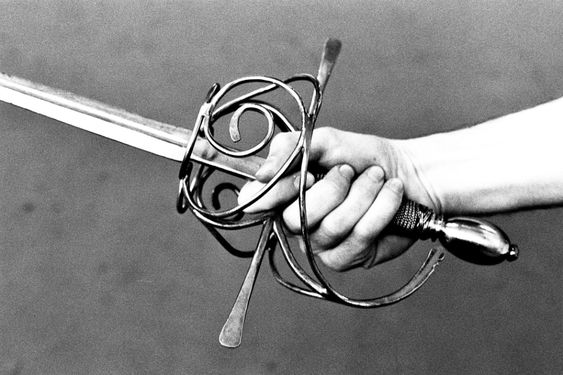
“Being undiplomatic (but more precise), I’d say he’s a pint-sized, pug-nosed, carrot-topped inadequate with a chip the size of Big Ben on his weedy shoulder. A sneer on legs. A malevolent buffoon. He’s too old to be any good with ghosts, but that doesn’t stop him from wearing the blingiest rapier you’ll ever see, weighed down to the pommel with cheap jewels.”
The Whispering Skull, page 18
This passage conveys so much sass, so much, well, voice. It’s oozing with it. My sentence is, again, passible, but you’re given only the barest, most brittle of bones. With the passage written by Stroud, you get a marvelous idea of: what the narrator thinks of Kipps, where they are approximately, how Kipps looks, and wee bit of world building. This is essential to making a story stick with your reader; giving them something to hold on to on a molecular level.
Before this excerpt, there was a physical description of Kipps, but that paired with the voicy description of him brings up the saturation of the piece. Lucy — the narrator — is filling these pages to the brim with her personality, and everything is through Lucy-tinted lenses. The book would be extremely different if it were told through the eyes of another character. A little bit of Stroud shines through in his writing (naturally), but this is all Lucy.
Voice can be polarizing. The enjoyment of prose isn’t entirely dependent on how it was created, rather, the reader. The example I presented to you is right up my dry-humored alley, but you may have thought that Lucy was being too harsh, or think that my mish-mash of words is entirely unpleasant to the eye (in which case I don’t disagree).
When it teeters into “objectively” bad territory is when the voice overwhelms what’s trying to be said, or, it’s blandness seems to suck up color like a sponge. You don’t need to be weighing down your writing with cheap jewels. Think purple prose (where the prose is so outlandish and insubstantial it overwhelms the reader). You want to use voice to accentuate the characters, or bring the world to life. Author and YouTuber Alexa Donne made an excellent video entitled, “Writing With Voice — Does it Truly Matter?” where she goes into detail about how important it is to be a voicey writer in today’s writing climate.
There is also something called passive voice. Passive voice is when the subject of the sentence is standing by while the object of the sentence performs the work. This pertains more to my previous grammar section, but it fits snugly here.
“The chocolate cake was made by Sam.”
That’s an example of passive voice. The subject is Sam and the object is the chocolate cake.
You may hear advice that tells you to avoid passive voice. That’s because passive voice has a nasty tendency to be muddled and drags the sentence. It can be utilized tactfully when you want to make the sentence muggy (or other cases), otherwise, just use active voice.
Active voice is when the subject is acting upon the object.
“Sam was making the chocolate cake.”
Here’s an article you can read that goes into more detail about active and passive voice.
Factor Three: Crappy Characters
This a massive one for me — if I don’t enjoy reading about your characters, I won’t enjoy the story. Some readers love purposefully unlikeable characters (like Mr. Darcy), but all that backfires when it’s made apparent that this character was created to be likeable. This is evident in the way that other characters and story treats the protagonist: everything is too easy, they’re too well liked, or they act like an ass but no one does anything about it (but they can).
Let me introduce Mary Sue/Gary Sue. Mary Sues/Gary Sues are often overpowered, the world and other characters always bend to their will, and more often than not they’re beyond perfect. They lack a substantial personality, and most importantly, they hardly ever learn impactful lessons. These characters are plain annoying because they aren’t challenged in meaningful ways. Sure, a baddie may do a Bad Thing to them, but they always bounce back up like springs — never bothered and always winning.
Readers can’t empathize with these sorts of characters because they’re virtually flawless.
Crappy characters also appear when they aren’t fully developed. They can be unbalanced (ex: the hero without flaws, or the villian with no humanity at all), lack motivation, autonomy, or personality. No one wants to read about a potato sack being dragged around by the plot.
You can have a good set-up to a character, have them all lined up for a nice arc or what have you, but they never get fired off. Or, if they do, they’re a dud and land in the mud with a little splat. The main character(s) have to be dynamic, going from good to bad or vice versa is up to the writer, but they need to change in some way over the course of the story. If they don’t the reader is going to wonder what the point even was. Side characters need to be people in the sense they have their own lives, but they don’t need arcs all of the time. Pick and choose your battles because you don’t want to overwhelm your reader with too many moving parts.
They don’t always need to be good people or be the most well rounded, but they all need to have a point. Readers recognize pointless persons and they’re going to get bored.
There could be a lack of connectivity between the reader and character. Not every character you create needs to be adored by readers, nor does everyone need to have this deep connection with the fake people. But, there needs to be something there. That exact “something” isn’t for me to define. We all have read about characters that we just don’t give a shit about, find borning, etc.
If no one cares about the characters, they’re not going to care about the story. Simple as that. Character creation is complicated and I highly advise you to do further research. Here is a free MasterClass article entitled, “How to Develop Fictional Characters: 8 Tips for Character Development” to get you started.
Factor Four: Sloppy Pacing
Everything is moving at a gallop in the book, then everything stops for some info-dumping or a really windy dialogue scene. Or, we’re running at a breakneck speed and there’s no room to breathe. Pacing is one of the trickiest things to nail down with writing.
There’s two types of pacing, both of which play into each other. First, is line level pacing. This is when you have a super short, choppy sentence, or a sentence is long and windy such as this one. Massive blocks of text are an eyesore for me. No indentation? No em dashes or fun formatting? Come on.
The other type of pacing is the overarching one. This pertains to how bigger parts of the whole interact with one another. The length of a chapter, scene, and act/part. It’s the difference between the sprint that’s a battle scene, and the Sunday stroll that can be investigating clues for a mystery.
Here’s where it becomes a problem: When it takes too long to get to the point. Where we’re going scene after scene of just talking when this was supposed to be an action book. When it takes forever for obvious information to be revealed to the characters. When it feels like we’re just wandering around aimlessly looking for the plot. The reader could also be suffocated by how fast things are moving, and they can’t grow attached to the characters, or get invested in the story because everything is moving so fast.
Pacing is a delicate balancing act and one I’m not terribly familiar with. If you’re newer to the writing scene, don’t worry about this as much. But definitely do care. Take note of pacing in books you read, see when and why you’re growing bored, and all manner of different things. As always, do some further research.
Factor Five: Detested Tropes and Clichés
One of my least favorite “harmless” tropes is the “very quirky and not like the others” kinds of characters. Ooh, they just annoy me to no end. You just really like comic books. Congrats. Don’t care.
A trope is something that is commonly used in genres (like a magic boarding school) and doesn’t necessarily have a negative connotation. A cliché is a trope that is overused and something most people are sick of seeing when not subverted (like some random kid stumbling into powers and becoming super powerful and is now adjacent to a god).
Anyhow, we all have those tropes that we could go on for ages about. Whenever they make a sudden appearance we roll our eyes or want to toss the book across the room. There is a time and place for all sorts of tropes and clichés, and just because one is being used that doesn’t mean it’s inherently cheap. I’m going to list some of the more vile ones out (in no particular order):
- Pointless Racism, sexism (both ways), homophobia, transphobia, and ableism
- Glorified abuser
- Toxic Love triangle
- The one useless best friend who’s only there to serve the protagonist
- Sugarcoated relationship abuse
- No one gets to be happy because this is dark and broody and super serious
- Forced romance
- Girl on girl hate for no better reason than to get the attention of a boy
- A friendship must always turn into a romantic relationship
- Men always have to fight each other and have sex because reasons
- The female lead is a glorified sex object
- Slut shaming
- Fat shaming
- The villainization of minority coded characters (LGBTQ+, people with mental or physical disabilities, people of color, and a whole host of others)
- Stereotypes of minorities — especially racial
- The savior complex
- A character being outed for the sole sake of plot/the other person wants to be in a relationship
- The glorification/downplay of sexual assault
I’m sure there’s so many that I’m forgetting. Now, these can be used if they’re utilized tactfully. They’re horrendous if it’s transparent that this is reflective of the author’s viewpoint, or there’s nothing counteracting these tropes, the characters don’t learn from these toxic viewpoints/actions, etc.
Here are some more commonly disliked tropes/clichés — though, these are far more subjective:
- Chosen ones
- “It was all a dream”
- Here comes the calvary!
- No communication whatsoever
- The wise old person that always gets killed off (always)
- Dead parents
- Everybody has this terrible tragic past yet they don’t have any form of trauma
- NO ONE GOES TO THERAPY NO ONE HAS TRUMA?? HOW? Y’ALL AREN’T OKAY
- Bro I just met you but I’m so totally in love. Mm yes, true love.
- Long, long descriptions of the characters examining themselves in the mirror
- And you’re overpowered, and you’re over powered, and you’re overpowered, and…
- This is how the human body works, oh yes, absolutely.
- ‘Yer a wizard Har—
Responses to my question of “What annoys you in books?” from my followers and friends on Instagram.
If you want to be included in future posts, make sure to keep an eye out on my socials for when I ask questions. I love interacting with y’all!
From Araya (@ray2_a): Tropes she hates: the damsel in distress, negative queer coding, and racial stereotyping.
From Harper (@the_magical_booknerd): “Honestly, I’m just sick of repetitive books that all have such similar stories.”
From Kiley (@kileyraica) “Overly dramatic characters when there’s no need to be dramatic.”
Why are we so bothered by bad writing?
Obviously I’m a top psychologist in every field imaginable and know everything that has to do with humans. I’m just overqualified to speak on the human condition and why we do what we do.
Here’s what I think: when we notice faults in the prose, or we grow bored by the pacing, or any number of things I mentioned previously, we get taken out of the story. We’re reminded that this is all fiction and it ruins the flow.
We want to effortlessly be sucked into a new world filled with impossible scenarios and loveable characters, and when faulty writing interrupts, we lose that connection. This is especially true if it applies to published works that readers have paid for. With most online content, we’re more forgiving because we’re getting this for free and obviously it’s a work of passion.
Besides, mistakes can simply be annoying, and we don’t want to be annoyed while doing something pleasurable.
Conclusion:
Being (presumably) human, we make mistakes; it’s inevitable. People aren’t expecting flawless work, but we do expect polished work — especially if we had to pay for it. I know I have made just about all of these mistakes in my own fictional work, but that’s okay.
If you think your writing is “bad”, that’s fine, but don’t let that stop you from trying to write and thus improving. If you think that your work is void of any mistakes whatsoever, then, well, I don’t know what to tell ya other than it isn’t as perfect as you think.
Naturally, all of these things have the possibility of being subjective, and what looks like a major flaw to me may not be a big deal to you. Taste exists.
Thank you for reading and I hope you get to have a buttery croissant later.
Please consider following this blog!
~ Jay
Oh dear, some of this advice is terrible! Nice blog btw 😀
[…] have a whole article detailing my experience with “write in your lane”, and in short, it made me (temporarily)…
[…] Write short fiction if you want to! I enjoy it because it breaks up the monotony of a novel.…
This is very true! They certainly aren’t harmless, and have proven to be quite the opposite, but I think it’s…
While the algorithms may not be “evil” or monstrous they are frequently full of biases that can have real impacts.…


 J. V. Montague
3 replies on “What Constitutes “Bad Writing” and Why Are We Bothered By It?”
Yo this post as well as your blog is lit. And you’re only a teen? Wow you’re gonna be a great writer.
LikeLike
Thank you so much! That means a lot ☺️
LikeLike
Insight 👌👌
LikeLiked by 1 person