Recently, I made an Instagram post comparing my writing from 2019/2020, to 2022 to serve as encouragement, to show how I’ve gotten better, but it ended up making me melancholy. Objectively, I got better: my descriptions are more vivid, my dialogue has nuance, and my characters are deeper, yet something is missing. I improved, but at what cost?
My main project from 2019/2020 was titled Princiepoo Goes On an Adventure, and I had a notebook full of character art and planning I took with me everywhere. I blabbered on about it incessantly. Enamored with a world full of dragons, sand, and making fun of the fantasy plot of “Chosen One goes on an adventure to get McGuffin” that was all upside down. Talking about it now, after two years of letting the project collect dust, I’m getting excited. There was this element of puerile insanity; throwing spaghetti at the wall to see what stuck, no outline, no real plot, just my characters and the world that solidified under their feet. I was so excited to see where my bumpkins would lead me whenever I sat down to write.
But now? God, everything is different now. Whenever I sit down to write I’m paralyzed with I need to make the dialogue flow better, need to make this work, need to make this look and read well so it’s easier to edit later. What is the character’s primary flaw? How is that impacting the scene? Question after question after question. I have a short story released, so I need to live up to that; be better than that.
Between the two works, my passion for character remained consistent. I still blabber on about Montoya and Rose (2022 Project) as I did with Zain and Tau. It was Princiepoo that got me addicted to the foil pairing of straight man and jester, which is evident in The Misadventures of Montoya and Rose. But the passion is different. Now with TMOMAR, everything is set up for a goal, everything has to be checked through my knowledge of “good” writing. It’s like pulling teeth.
When I try to turn off Writer Brain™, and have fun with a scene, it inevitably switches back on and squats down. I reread what I wrote over and over, looking for ways to tighten up the prose. Back in 2019/2020, I didn’t care if it was good. Yes, I wanted to improve, but I knew that a project titled Prinicepoo Goes On an Adventure, wasn’t going to be the crème de la crème, so, anything worked. I was so free with my writing.
I am my own issue. As I improved, learned more about the craft of writing, dabbled in teaching writing, thus creating standards for myself. It’s not good enough to simply have fun with something, it has to work. And in a slightly depressing, capitalistic way, I have to make it good so it can make money. It’s the mindset of if I do it right the first time, I can get it out sooner, set up my career early, and earn a coin.
That’s fucked.
These past few weeks I’ve felt so down on my work, nitpicking it, and borderline insulting it because it isn’t “good”. I can’t get the words to flow because I’m so anal-retentive about the words I am putting down being “good”. It has been a year since I started writing TMOMAR, and it has lost some of its luster; my ideas aren’t fresh and shiny anymore, they just need to be implemented. Some of this feeling can be attributed to the fact I’m on a second draft, a complete rewrite of the book, and with Princiepoo it was the first draft (though, I did get about 21k words deep).
And I had to address the fact that I stopped working on Princiepoo. Why? I was moving on. I wanted to work on a more complex, more difficult thriller idea, that was gritty, and “cool”. Something challenging. The cutesy little adventure story wasn’t cutting it for me anymore, and I was losing interest. I wrote myself into corners, and I started needed to pull off the things I was setting up.
Good job, kid. You grew up. Now what?
Now I need to go back and start working on things for myself, with no need of thinking about it getting published, worrying about it being good. Just cut some of the angst out of it and enjoy what’s left of my childhood. It’s important to strike a balance between taking a project seriously and having a dinky little side piece that serves no other purpose than to make me happy—that’s why I started writing in the first place.
“You’ve taught me how to bring happiness into my life, how to smile and see hope when all seems lost, you’ve guided me through the hardest trials. You’ve given me so, so much, and I can only hope that I’ve done the same for you.” Absolutely not, darling. How have we grown together? What the hell is she doing? None of this makes any fucking sense.
May 26, 2021, at three in the morning on a stormy night, lightning struck and I was lying awake in bed. Thunder boomed and my mind was alight with a new story. I had just started writing a Romcom, but this new idea was beyond alluring. It was of adventures and action, love and betrayal, and I was convinced it would be something grand.
A simple scene came to mind; two men sitting in a train car, one white, the other brown, and they were in love, perhaps husbands. They didn’t have clear faces, but I had an idea of who they were. They were discussing their next big hit—a golden heart—while gazing out the window. There was a gold-tinted elegance to the scene, to the way they interacted, and I was mesmerized.
The next day, before school started, I created a Google Doc jotting down all my ideas for the story. The first thing that always comes to me are the characters, so I made an extensive bullet point list for what would become Montoya and Rose.
The fundamental ideas haven’t changed since May: The Misadventures of Montoya and Rose or “TMOMAR” takes place in the 1920s where an archeologist, Montoya, and a scammer, Richard Rose, hunt down mystical artifacts. Reminiscent of Indiana Jones and The Mummy TMOMAR is a story meant to be brimming with action, adventure, and magic.
I never had a particular reason for making Montoya Indian (hailing from India), that is simply how I envisioned him. Much like how I always envisioned Rose as white and redheaded. I wanted Montoya to be the main character because I liked how composed, intelligent, and well-researched he is. I also noted how in many of the inspirations listed above, many of them don’t feature a POC as the main character, and I just… wanted to. Not because I thought I would be some sort of a savior, but because I like how Montoya is, I want him as the lead, and I don’t see it all that often.
The development for the story continued on unbothered for some time. I submitted the first chapter for a creative writing class in April (I got an 80 on it), and went to work.
Then, I discovered a YouTube show that would alter my perspective and inadvertently lead to the death of TMOMAR.
Act 2
“Book CommuniTEA” is a YouTube series created by Jess Owens discussing the “goings on in the bookish community”. Owens goes into depth about the drama and discussions floating around on bookish Twitter and gives her opinions on the matter.
I fell into the series because the videos are long enough for me to listen to while I got ready for school, and because I enjoyed (and still do enjoy) Owens’ wit and perspective on the drama. I watched those videos every day and I noticed a shift in how I was thinking.
Before I continue on, while Book CommuniTEA was very influential, I am in no way blaming Owens for what happened, nor do I think it’s her fault. I was, and still am, an easily influenced teenager, and it could have been any kind of series that led me to think in the manner in which I did.
Through Book CommuniTEA, I was beginning to deeply think about the perspectives of the POV voices on Twitter about representation in literature. I was introduced to the idea that a white (cis-gendered, straight, able-bodied, etc) writer should “stay in their lane” and “write what they know”. To be clear, these are not necessarily the opinions of Owens, rather, these were the opinions of nameless Twitter users that she was reading off of.
From there I learned more about the #ownvoices movement in traditional publishing; the idea that more stories about minorities should be published by people in that minority group. Since its origin in 2015, the movement has come under harsh criticism for not holding up to scrutiny. If you want to learn more about this subject matter, I recommend watching Rachel Writes’ video “Writing Diversely & the problem with ‘staying in your lane’”.
At this point, TMOMAR was trucking along, and I started doing research for it (up until that point it was primarily character and plot building). I learned about the deep-rooted discrimination against Asian people by the United States, and I was in shock. I was not aware that they were not allowed to be naturalized citizens until the 1960’s, and less so about the numerous bans against them. My American schooling never taught me about the dehumanization of Asian people in my own country. I found out about it from a Young Adult book, not a textbook. This set me off, but it also filled me with guilt.
How was I so unaware of this? I felt cheated by my school system, but I felt awful about myself for not knowing such a dark and massive part about history. For what felt like for the first time in my life, I was made painfully aware of my privilege as a white person; I could easily live my life not knowing because American society has constructed itself in such a way where I didn’t need to know.
This altered not only my worldview but how I saw TMOMAR. I thought, how can I write a story set in the 1920s and not talk about this? Montoya would constantly be faced with horrible, blatant racism because he’s Indian. While I was aware of the racism of the 20s, and while I assumed that Montoya would be treated worse than his white counterparts, this was more specific, it was more informed.
This is where I started thinking that I needed to write a trauma story. This is where everything went horribly wrong. From my (limited) knowledge of a sensitive topic, I assumed that I needed to hyperfocus on that sensitive topic in order to tell the story I wanted to tell. TMOMAR shifted from being an adventure story—something well within “my lane” to write—into a story I had (and still don’t have) the qualifications to write.
Why did I feel I needed to change TMOMAR?
I didn’t want to write a novel set in the past and ignore the issues that the 20s had. I wanted to stay true to the era and not glorify it.
But there’s magic in that world. Naturally, I was very closely adhering to reality.
It was a vain attempt to do what my predecessors in this genre (to my knowledge at the time) didn’t do. It was to be sensitive to Asian and Indian people who lived in the United States at that time.
Then the misguided puzzle pieces were forced together.
Act 3
I was beginning to “write outside my lane”.
If TMOMAR is set in the 1920s, it follows a POC protagonist, and because of that I have to focus on the racism and discrimination that he would face, but I’m white, therefore, I cannot write that story.
“Part of the issue for me was not seeing Montoya beyond his race.” I said in a video I posted to Instagram on this subject.
All the voices and opinions of strangers swirled around in my head, and I took the bits and pieces of their narrative and constructed one of my own. I was terrified to “write outside my lane” and risk hurting people. But no one in my actual life told me to quit. No one that knew me supported these ideas. Everyone I talked to about this was kind and supportive, and they offered fantastic advice.
And that’s where the majority of fear stemmed: not wanting to hurt others.
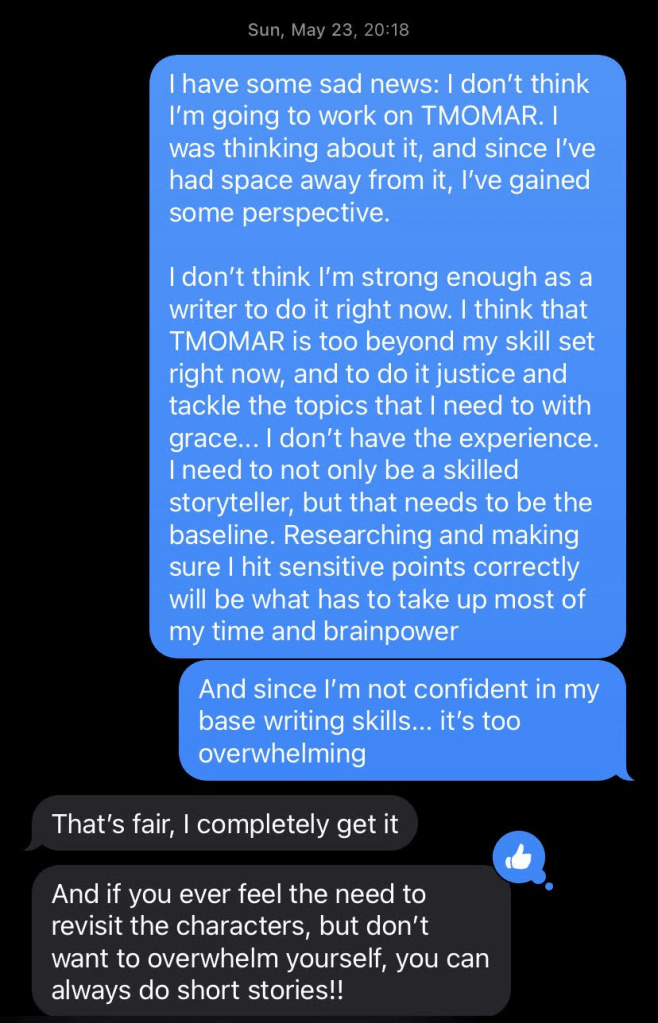
One of the things talked about in Book CommuniTEA is how well-intentioned white (among other things) authors missed the mark in trying to tell a diverse story. I thought that it would be better for me to not write the story at all than to miss the mark, hurt others, and be a “bad” person. I felt I had to give up the story because I was afraid of the research necessary in order to tell that version of TMOMAR well. But even then, I had a defeatist attitude.
I decided the best thing for me to do was to quit.
On social media and with my friends I didn’t dive into the racial component of this decision because I didn’t feel comfortable talking about it. Plus, the fact that I was terrified of the mountain of research that needed to be done and the general mounting fear of the project were enough reasons for me to quit.
I fell into a mourning period. At that point, I had spent three months of my life growing attached to my characters, their story, and all the little things associated with them. When I caught myself listening to a song and thinking that’s something Montoya would enjoy I would mentally slap myself on the wrist.
Around that time I also fell into my worst writing slump to date—but there were many, many factors leading to that. I felt worthless in my writing and by extension, myself.
About a month later, I was tired of listening to the same sort of music I had been listening to and decided to poke around on the abandoned TMOMAR playlist. In an instant, all the ideas, the hope, the adoration for The Misadventures of Montoya and Rose flashed before me. All of the reasons I started writing that story to begin with. All the reasons I fell in love with it.
Because of the time I spent away from it, I realized that what I thought about wasn’t making it realistic, it was putting the ‘fiction’ in ‘historical fiction’. TMOMAR didn’t need to be focused on the horrible bits of the 20s because that’s not what it was about. There is enough room for me to understand and acknowledge the racism of the 1920s while not fixating on it.
This is what my friends were telling me all along.
I treated TMOMAR like some ground-breaking literary novel about the nuances of racism and placed that weight onto my weak shoulders. And I collapsed.
Epilogue
TMOMAR has not been easy to write, but I have loved each and every moment of it. I have a lot of research ahead of me, and I always will, but I’ve been chipping away at it. When the first book is readable, I’ll hire sensitivity readers to help me fill in the gaps and make sure the book isn’t being offensive with its portrayal of Montoya and other POC characters. I’ll make sure to respectfully ask people questions. I’ll do all that I can so that TMOMAR can properly convey what it’s supposed to be: an adventure story with larger-than-life characters and magic.
To a certain extent, Past Jay was correct in not wanting to write outside his lane. I think in some ways, it prevented a catastrophe of a book, and in others, it stifled creativity. “Write in your lane” and the ideas behind it are so complex and nuanced that I can’t cover it in this post.
It has been a long journey to come where I am now, and I don’t see it ending any time soon. However, I am passionate about my story and my characters and I’m willing to learn. And right now, that’s all I can hope to do.
The Golden Heart, the third book I have ever written, is unlike anything else I have ever created. While my process for it has been much the same as it has been in the past, now it feels more streamlined. While there are many, many flaws in this first draft, I am proud of my little monster (I say that with all the endearment in the world). In this post, I will work to break down the major things I have learned from this first draft, what I did and didn’t do well, and my overall thoughts.
Synopsys of The Golden Heart
Montoya has been searching for the golden heart since he could read English. What started with childhood captivation fueled by support from his father has divulged into obsession. The heart, rumored to heal all that wears it, would be proof of an ancient society that has long since been lost to time.
It would also be Montoya’s big break — a chance for him to cement his name in 1920s archeology circles.
When Montoya gets locked into a deal with the Devil, gets shackled to a partner who wants nothing more than riches, and when his arch-nemesis is biting at his heels, he realizes that archeology is much more than a dig site. Twist after turn, Montoya gets thrown on an unforgettable adventure through the jungles of South America.
Will he be able to find the golden heart and return to New York City in one piece, or will he be lost to time like all those who searched for the heart before him?
The Golden Heart is the first book in The Misadventures of Montoya and Rose series.
Stats
Started: July 14, 2021
Finished: November 24, 2021
Total word count: 60,587
The average number of words per day: ~ 456
Page count (8×11): 176
Number of chapters: 45
My NaNoWriMo Chart
My Major Strengths
Characters
The biggest thing I’m proud of with this book is the character arcs. And while right now, a day after finishing The Golden Heart, I can’t say if I’ve done it well, I most certainly put forth the effort to have all (or at the very least most) of my main characters change. Montoya and Rose have gone through an allies-to-enemies-to-allies-to-friends arc and it was a blast to write.
I decided to include more side characters—make them matter—and I did it! I’m so proud of myself for hitting that goal that I set for myself. And now, I understand what other writers mean when they say that side characters can steal the show. I’ve fallen in love with so many of the side characters in The Golden Heart, and I feel the value of having appealing secondary characters — they make my novel richer (wow, really? No way!).
I can’t wait to refine the work I’ve begun with these characters and see where they’ll go.
Perseverance
The Golden Heart was my NaNoWriMo project this year, and I not only hit my goal early, but I also finished the book (obviously).
I changed my daily routine to include writing. I woke up at six, and by seven I would have my butt in the chair, drafting. By doing this, I have been able to consistently add in 500-700 words, even when it would turn out to be a hectic day. By starting my day out with my project, I would have it in the back of my mind, quietly working on it, while I focused on other tasks.
Oddly enough, I didn’t hit too many roadblocks while drafting The Golden Heart, which I attribute to my better understanding of story, but when I did, I shoved my way past them. No, I didn’t deal with them gracefully, I just put my issues into brackets and pretended to solve them.
“Chapter 16” of The Golden Heart
My Major weaknesses
Pacing
The pacing of this novel has and will continue to keep me up at night. While drafting, it felt as if I was overwriting and adding in too much detail, but now I look back on it, I don’t think I added in enough… well, everything. There isn’t enough action, there isn’t enough “adventure”, there isn’t enough exploration; you know, the stuff that this book is about.
I joke that I wrote a classic novel disguised as an adventure story with all of the conversations and navel-gazing in the prose. And while that can work, it’s not what I’m going for.
Traveling to get to the temple where the Heart is located takes up 97% of the book while being in the temple takes up maybe 2% of the book and the ending is 1%. Not the ideal story structure, I must admit.
Beyond that, while I am happy that character arcs exist, they aren’t padded out throughout the story, and most of the development is jammed in at the end.
Hanging Threads
I brought up a facet of the worldbuilding to which I never brought resolution. A handful of side characters are left hanging in thin air. An entire side plot is just… unresolved. This is to be expected from a first draft, and a first draft that was written by the seat of my pants. Still, it bothers me.
Gaps in my knowledge
I had (and still have) many gaps in my knowledge about the 20s, which is a terrible thing considering the setting of the book. There is only one way to remedy this.
It truly shows in the way that the characters speak, the way that they get around, the way that they treat societal norms, hell, even some of their viewpoints. I am the most ashamed to admit that there are so many cut corners in terms of history, but I will do better about it in future drafts.
This is the thing I feel the most ashamed about, but I know why I didn’t do more research before I began: I didn’t know what to research. Now that I have a better understanding of where and why the characters travel where they do, I can hone in on what I need to learn and fix it.
What I’ve learned
People are willing to listen to you ramble about your book even if they haven’t read it.
One of the biggest things that separate The Golden Heart from my previous novel writing projects is that I talked about it while writing. I never shared the entirety of the first draft, but I rambled on about it on my Instagram page, and people were incredibly receptive. It’s heartwarming for folks to seem just as enthusiastic about your work as you do. I know there are some major pitfalls to sharing a project this early, and I’ll just need to see where this takes me (and remain cautious).
I assumed that only myself and maybe one or two others would be invested in my characters, but I was wrong. So very wrong. And I’m thankful to be wrong!
Having genuine enthusiasm about your work, sharing that enthusiasm, and being earnest about your passions (in the right community) will generate love and support for that project.
So much is gleaned from diving into your story
How effective pantsing is will vary from writer to writer (and even within the writer!), but I know for certain how much depth I can get from characters and setting when I simply start writing. It’s amazing.
In my mind, when writing fiction, I need to get hands-on with the novel to get what I need from the story.
Miscellaneous Thoughts
I adore the adventure, the banter, the action, and the dialogue between characters. I love Montoya and Rose with all of my heart, and I can’t wait to see where they’ll go from here!
I know there is possible years’ worth of work ahead of me with this book alone. I am ready to face it—just not right now. Eventually, enthusiasm will ebb and grit will have to take its place, but right now I’m riding the high of the honeymoon.
I’m thankful to get away from the grind of drafting a novel, and I’m looking forward to working on smaller projects.
How The Golden Heart compares to my previous novels
It was less difficult than Heaven’s Hellions (you can read the post about my first book here) but more difficult than my Romcom (which I started and finished earlier this year). The adventure, historical, and magical components of the story put me out of my comfort zone, but not too much so that I floundered. At this point, I’m finding my groove with my drafting process.
I think that it’ll be far more difficult to edit than my previous books. However, I can’t say for certain.
Thank yous
As always, thank you Emily for being there through the highs and lows of The Golden Heart’s creation. Thank you for being a receptive ear, and excellent person to bounce ideas off of, and for being one of the greatest people I have ever met.
Thank you, Meg (@meg.the.author on Instagram) for being an amazing cheerleader and friend and giving me an extra push when I needed it.
Thank you, Athena (@author.athenagrey on Instagram) for always being someone I could rant to about my book, and for mutually wanting to stab Victor with me.
Thank you to everyone who has supported my many, many posts about The Golden Heart on my Instagram page. Thank you for being invested in my work and cheering me on as I crossed the first draft finish line. Thank you for listening, thank you for being there, and thank you for your time.
And thank you, dear reader (now this is a callout) for getting to this point on the post, and being invested enough to read to this point.
As we near the end of November, many of you will be feeling a little frazzled and burnt out on your projects. But with plenty of time left to go, you need to try and avoid burnout as much as you can.
As some background, this past summer I hit some of the worst burnout I’ve ever had with writing; right at the beginning of it I finished the book I had been drafting, and I had no clue what to work on next and I had no motivation to actually work on another project. Having pushed through that, I’ve come to some realizations.
1: Consistently consume media while writing
This is one of my biggest mistakes, and it always leads to a “dried up” creative well. I don’t read as much as I should, I don’t watch any TV shows or movies, thus, I’m not studying stories.
It’s so important that you take the time to read/watch other media as you write — not only so that you don’t run out of ideas, but also because it allows for you to study story. Most of our knowledge on the subject is intuitive, and in order to continue learning, we must continue studying.
Take some time out of your day to pick up a book, or read a poem from a collection. Maybe listen to an audiobook while you do chores. Find the time to squeeze it in during your hectic schedule.
2: Don’t force yourself to write when you’re feeling sick of it
Or, if because of Nano you have to, break it up into smaller, more manageable chunks throughout the day. Listen to your “heart” when it’s telling you it’s tired. Sometimes, yes, you need to persevere, but there are times where it’s better to cut your losses and rest. If you can’t tell if it’s one of those times where it’s better to push through, set a ten minute timer and do a writing sprint. How do you feel after doing that? A lot of the time you’ll want to continue, but if you don’t, then simply don’t continue writing.
3: Schedule times to not write
I tell myself that I don’t need to write in the evenings, however, I need to write in the mornings. An extension of this tip is to have a writing schedule, but so much of the time we’re focused on when to write that we neglect how important breaks are.
You can prevent a crash-and-burn burnout by allowing yourself one or two days out of the week where you expect yourself to not write, or write very little. It’s like knowing you have a weekend, but with writing.
4: Don’t guilt yourself over not writing
Life happens. Motivation ceases. Brain does that thing where it’s unhappy. Whatever the case, beating yourself up over not doing a very time-intensive hobby is not going to make you want to do the time-intensive hobby. Take a deep breath.
And I’m here to remind you that if you haven’t written recently, that’s okay! You’re still a writer and you’re still doing amazing, wonderful things.
5: Do things that are adjacent to writing
One of my favorite examples of this is drawing my characters. Do something that’ll make you think about your WIP without having to expressly work on your WIP. Or, you can go for a walk, workout, generally do something physical to get yourself out of Writing Mode™ while you brainstorm ideas.
6: Journal your feelings about the project.
I do this via social media, but putting this in your personal journal or keeping it separate really helps. If you have a writing buddy, chat to them about all your feelings about the project. I find that when I’m feeling unmotivated, or I’m on the verge of burnout, seeing the passion I have for my project fuels me to keep going (or at the very least spite the honeymoon phase Jay).
7: Don’t take yourself too seriously
Tease yourself about your mistakes, pretend you’re a bestselling author giving an interview about your project, make memes/jokes about the characters/plot of your novel. Whatever you do, make it fun so that you don’t feel like you’re carrying the weight of this project on one shoulder.
Thank you for reading, and hopefully you found this helpful! No matter what you do, know that I’m proud of you and you’re doing so much better than you think you are.
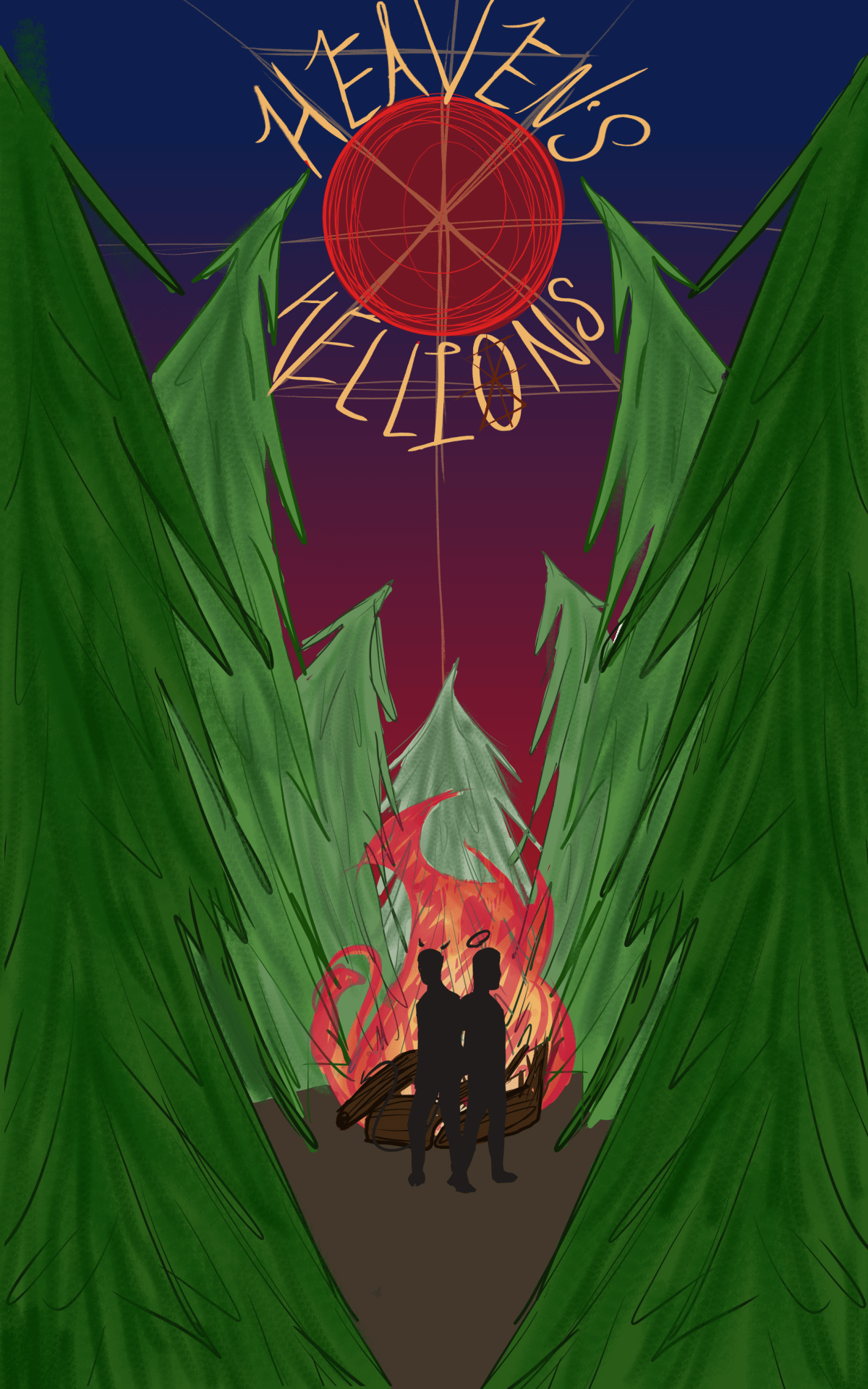
At 12:22 am I wrote the last sentence of my very first book, Heaven’s Hellions. Delirious from working on it for the past four hours, I made many questionable decisions and wrote an ungodly amount of typos. But it’s done.
I wrote my first book and it is over.
Now I want to dissect the experience, tell you what I loved doing and what I hated, ponder my victories and failures, chat about where to go from here.
Stats:
Word count: 51,143
Number of pages: 114
Number of chapters: 27 (not including the prologue)
Started: June 15, 2020
Finished: November 15, 2020
What I thought Heaven’s Hellions was going to be:
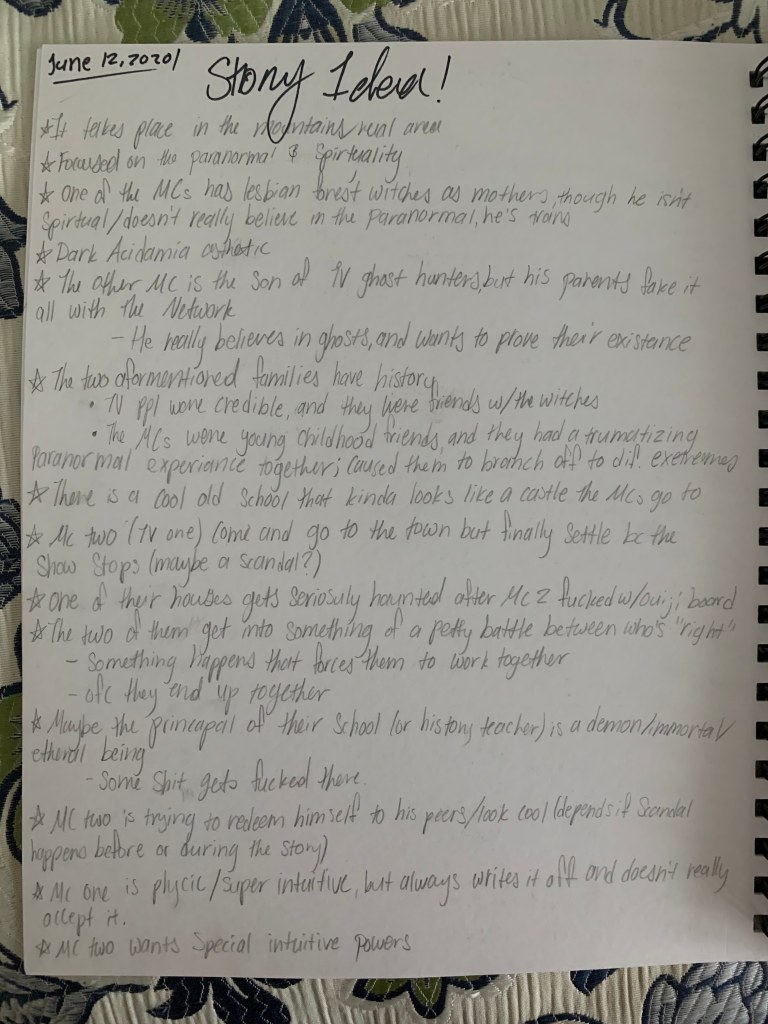
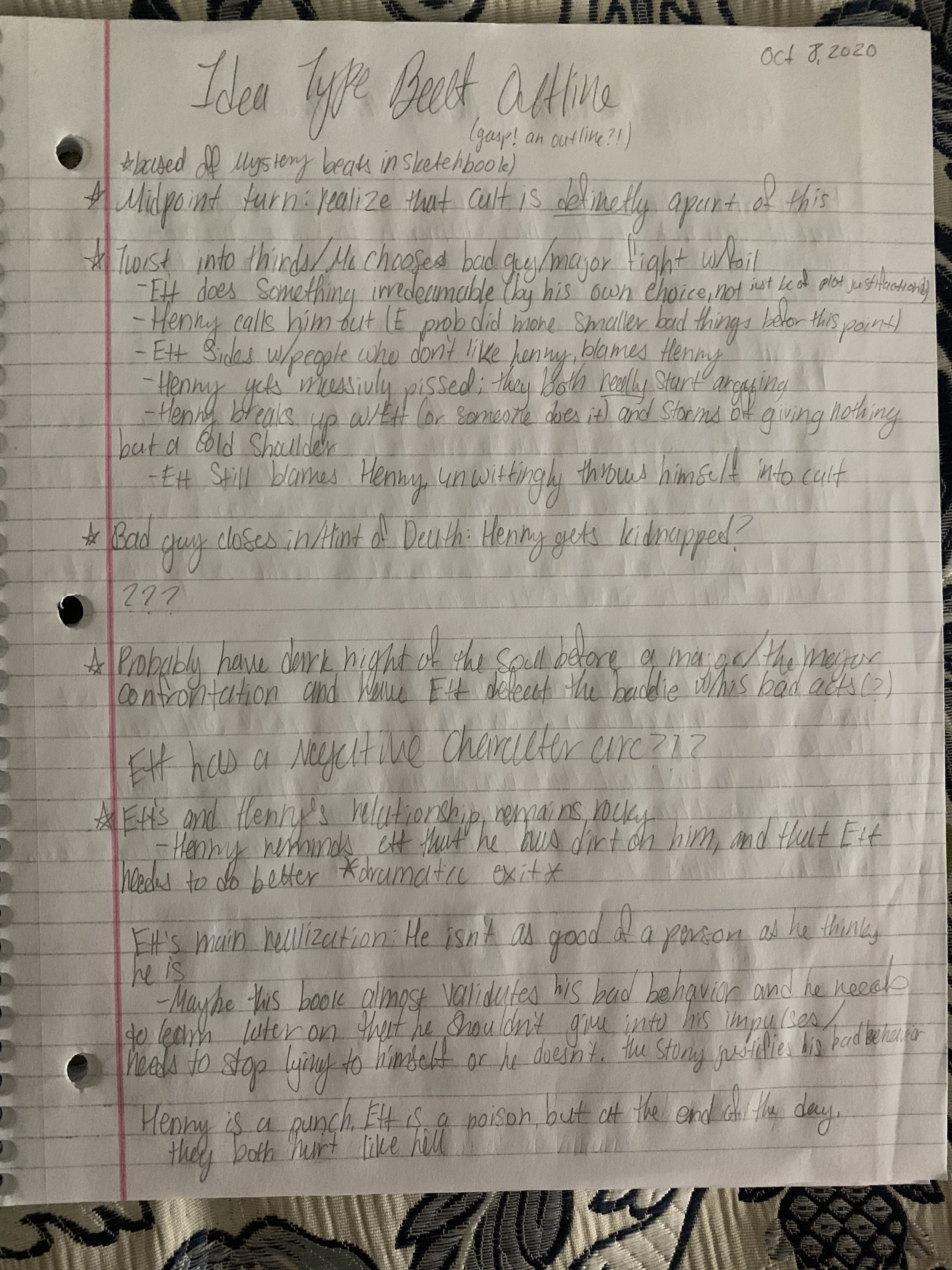
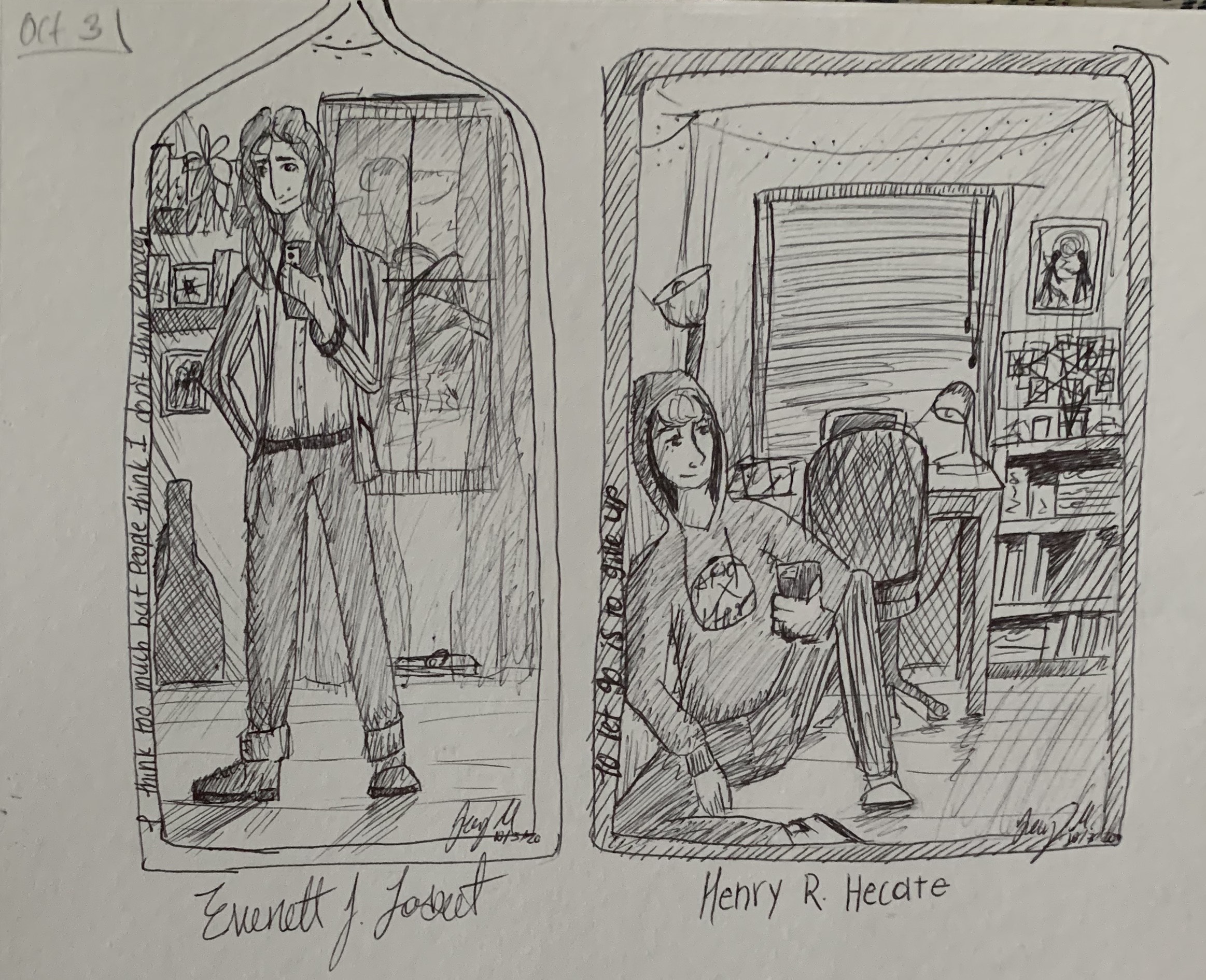
It was supposed to be a paranormal mystery. Everett the Believer would be trying to convince Henry the Skeptic that ghosts exist. In the meantime, both boys get haunted. That’s about as far as I got in the original concept.
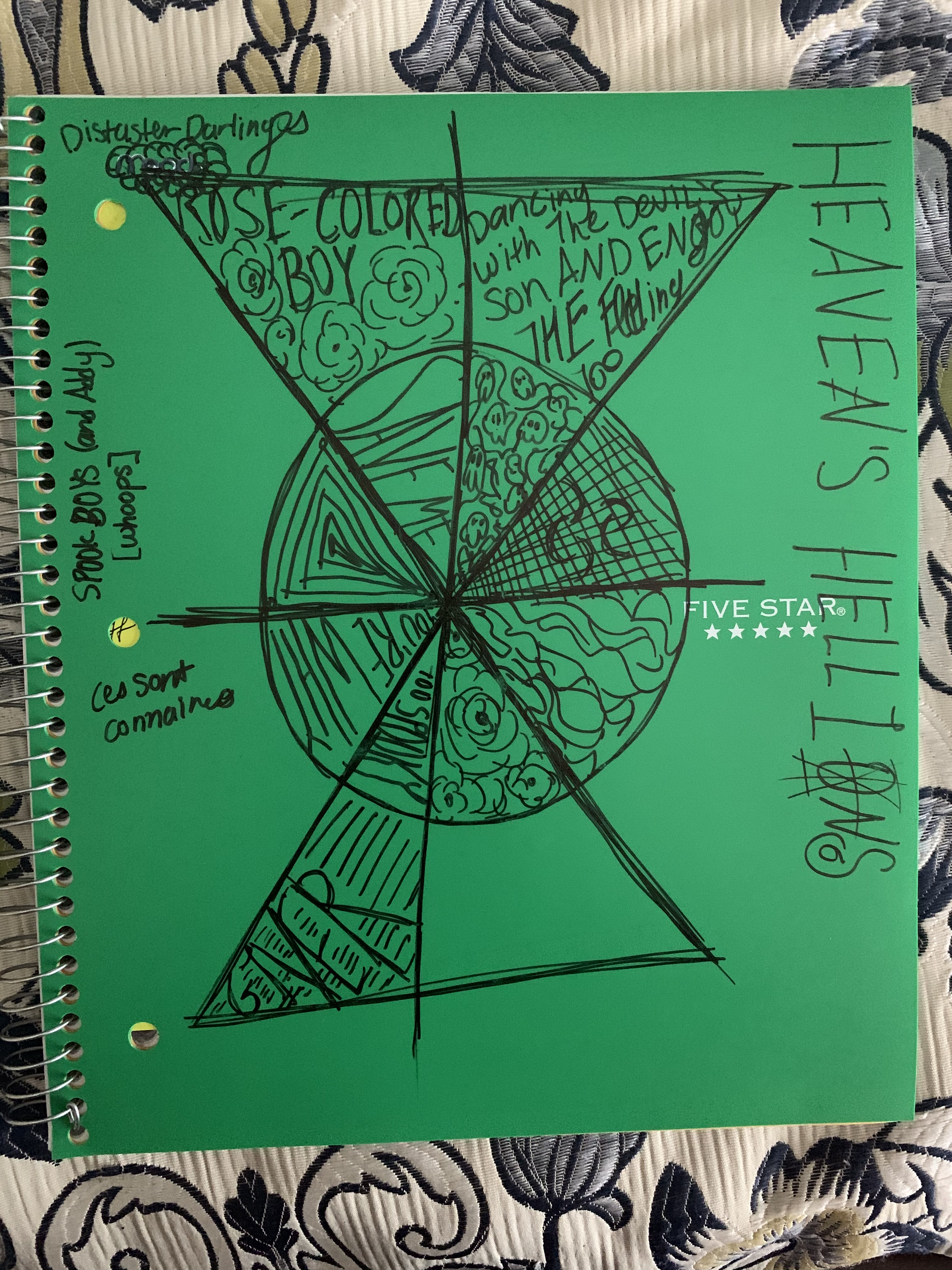
Then it divulged into something where Christan mythos would come into play (hence the title of the book). Nothing came of that.
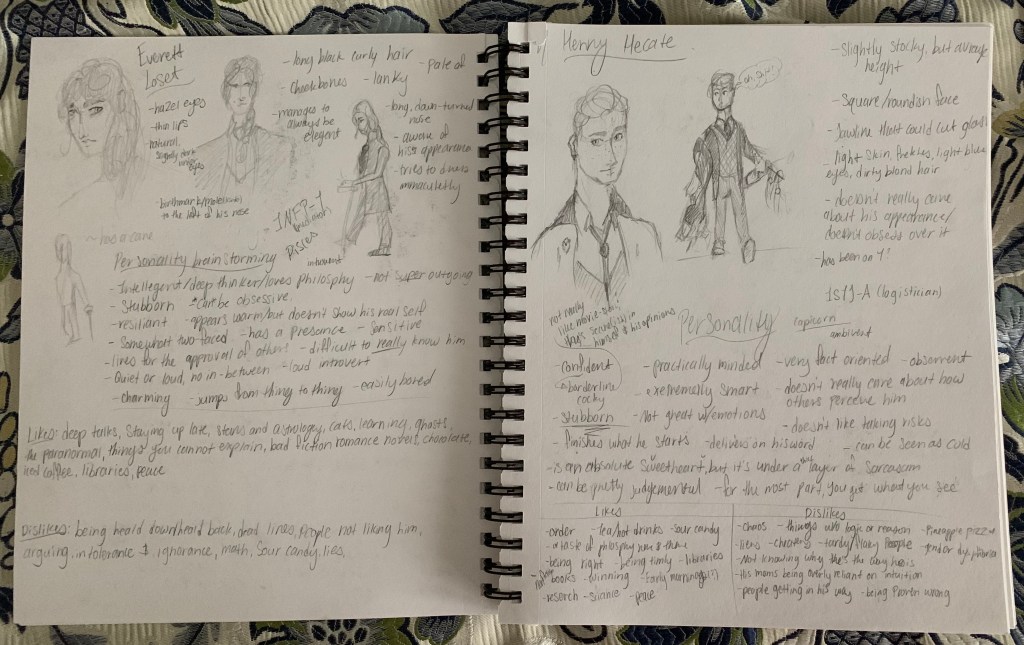
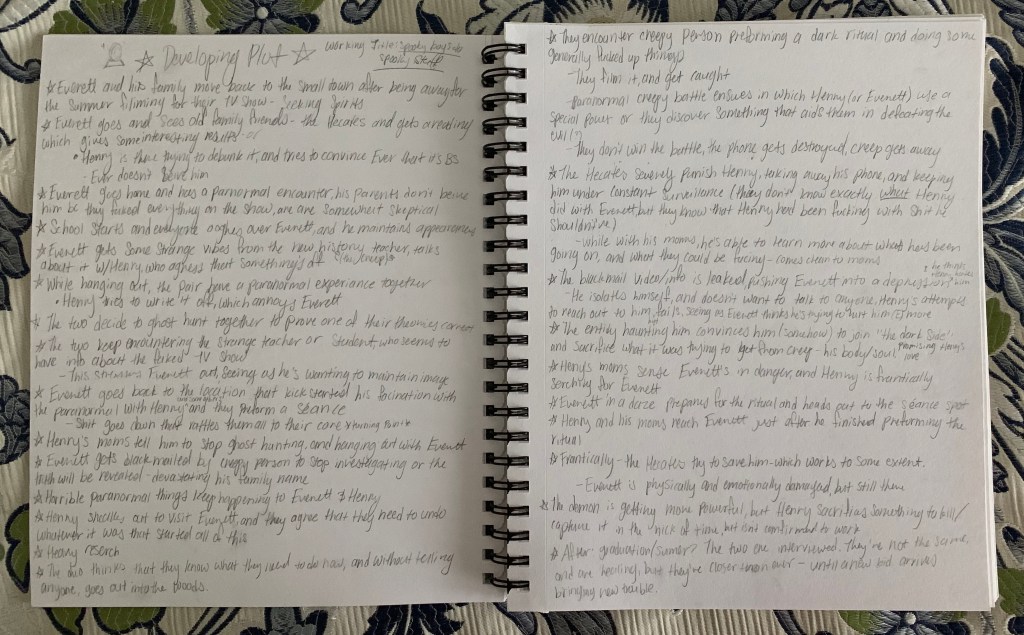
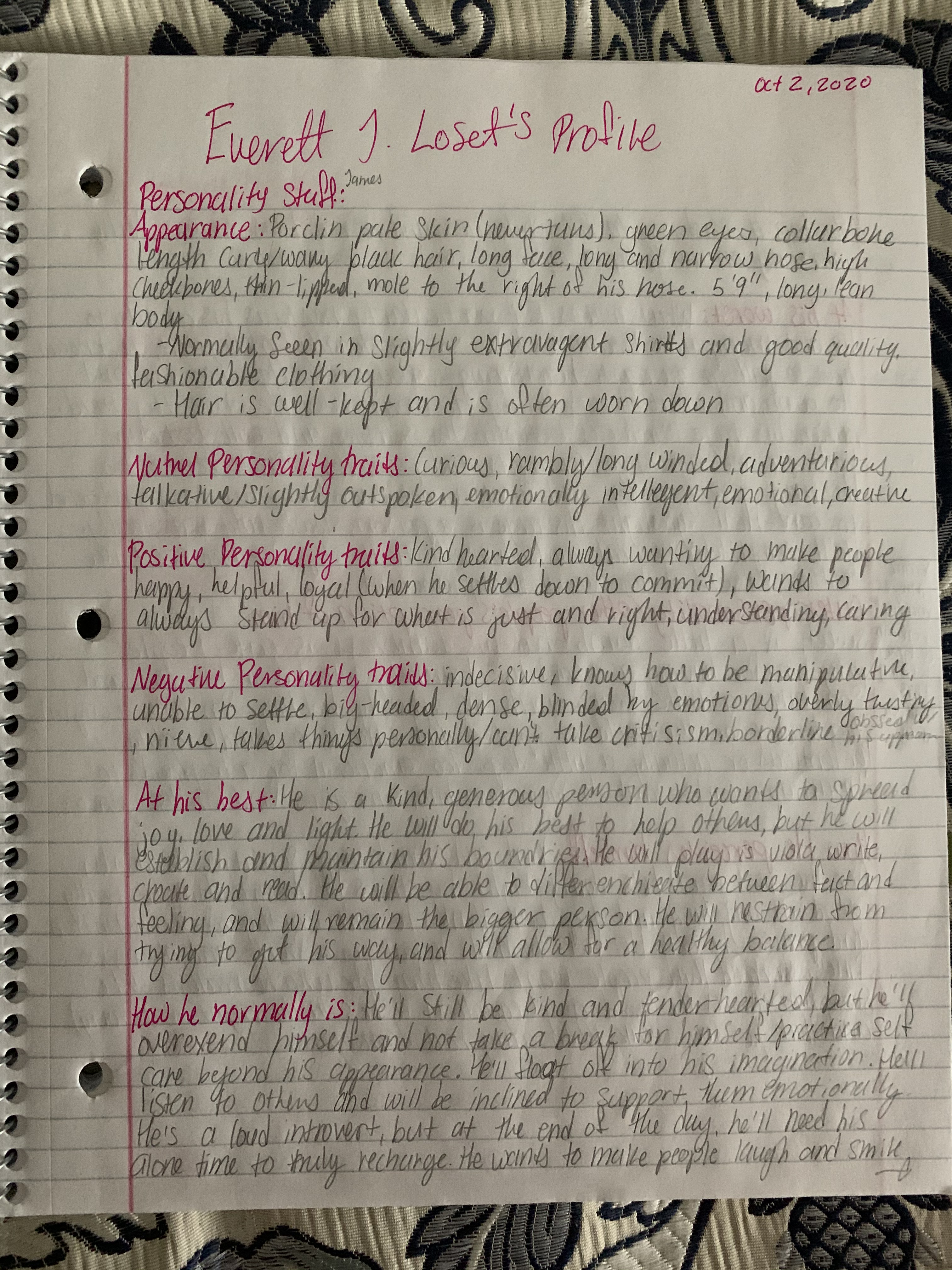
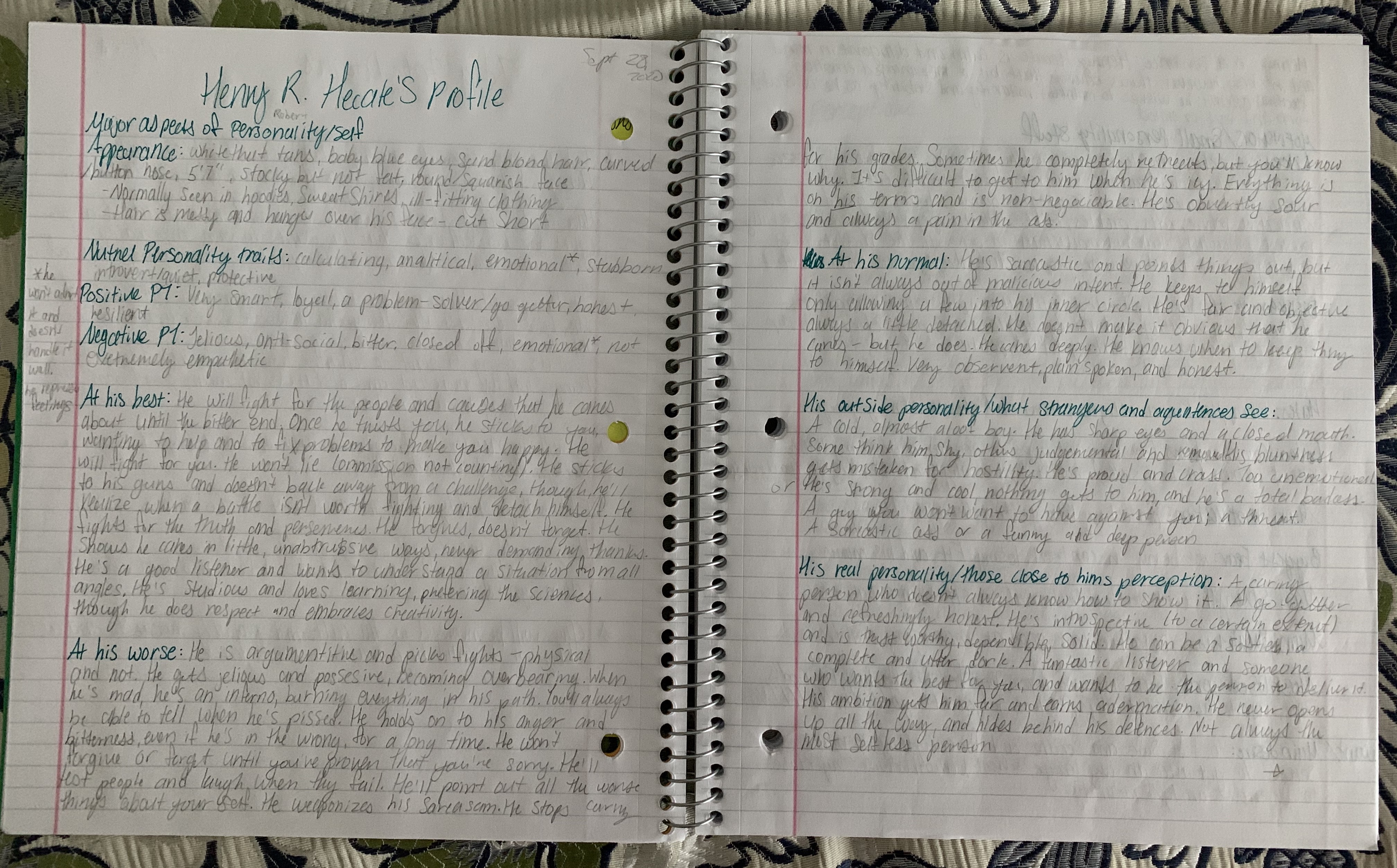
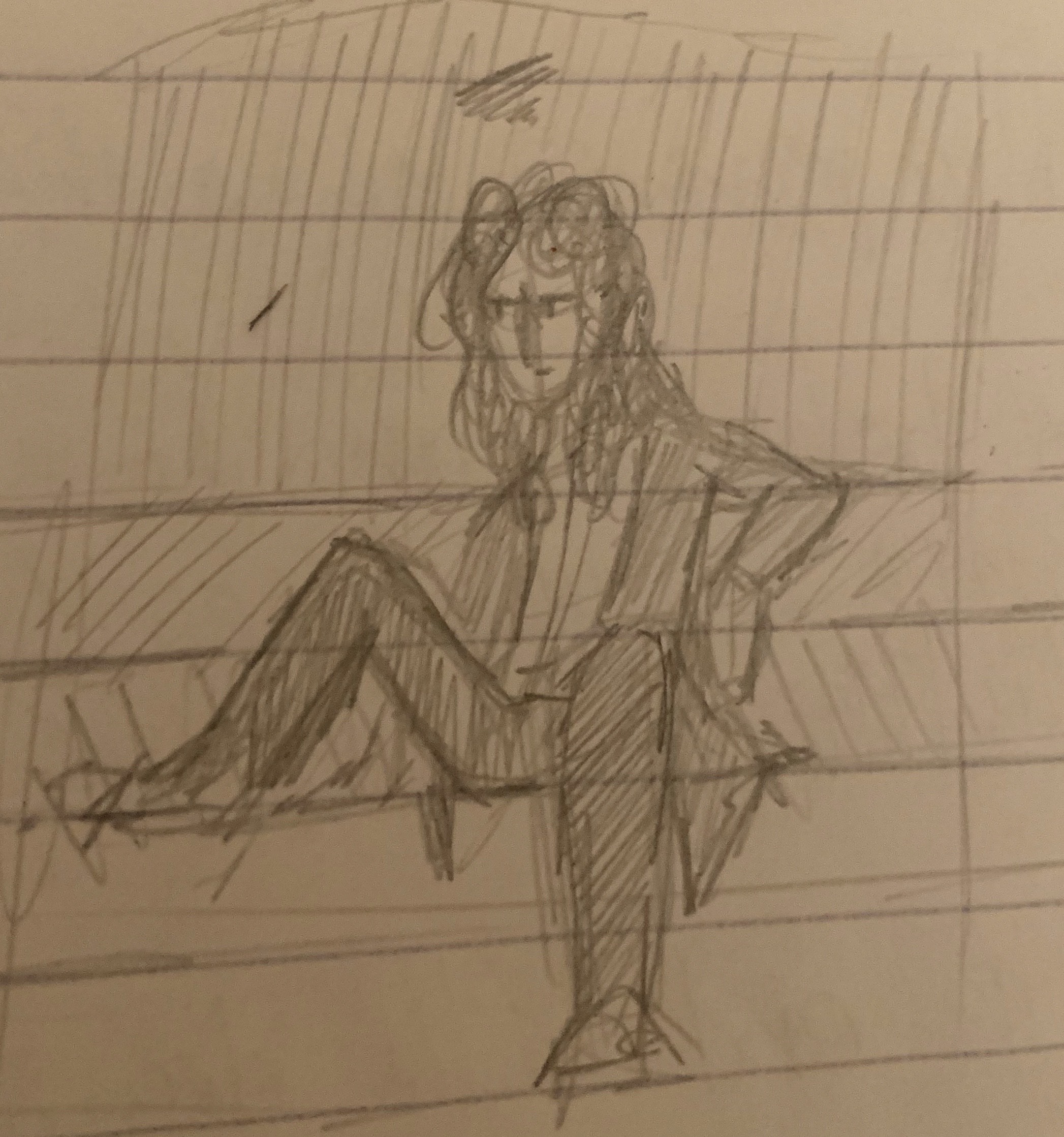
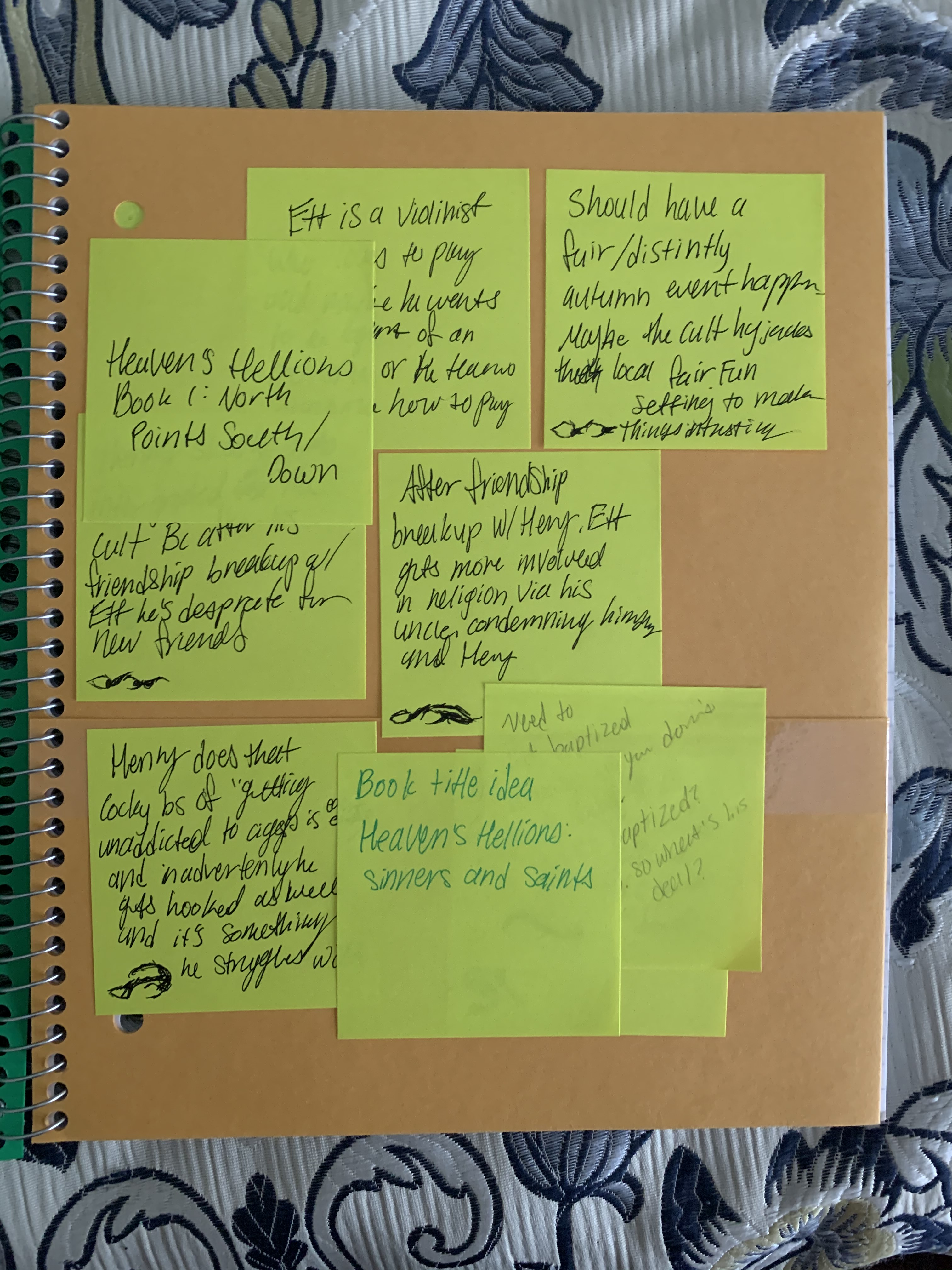
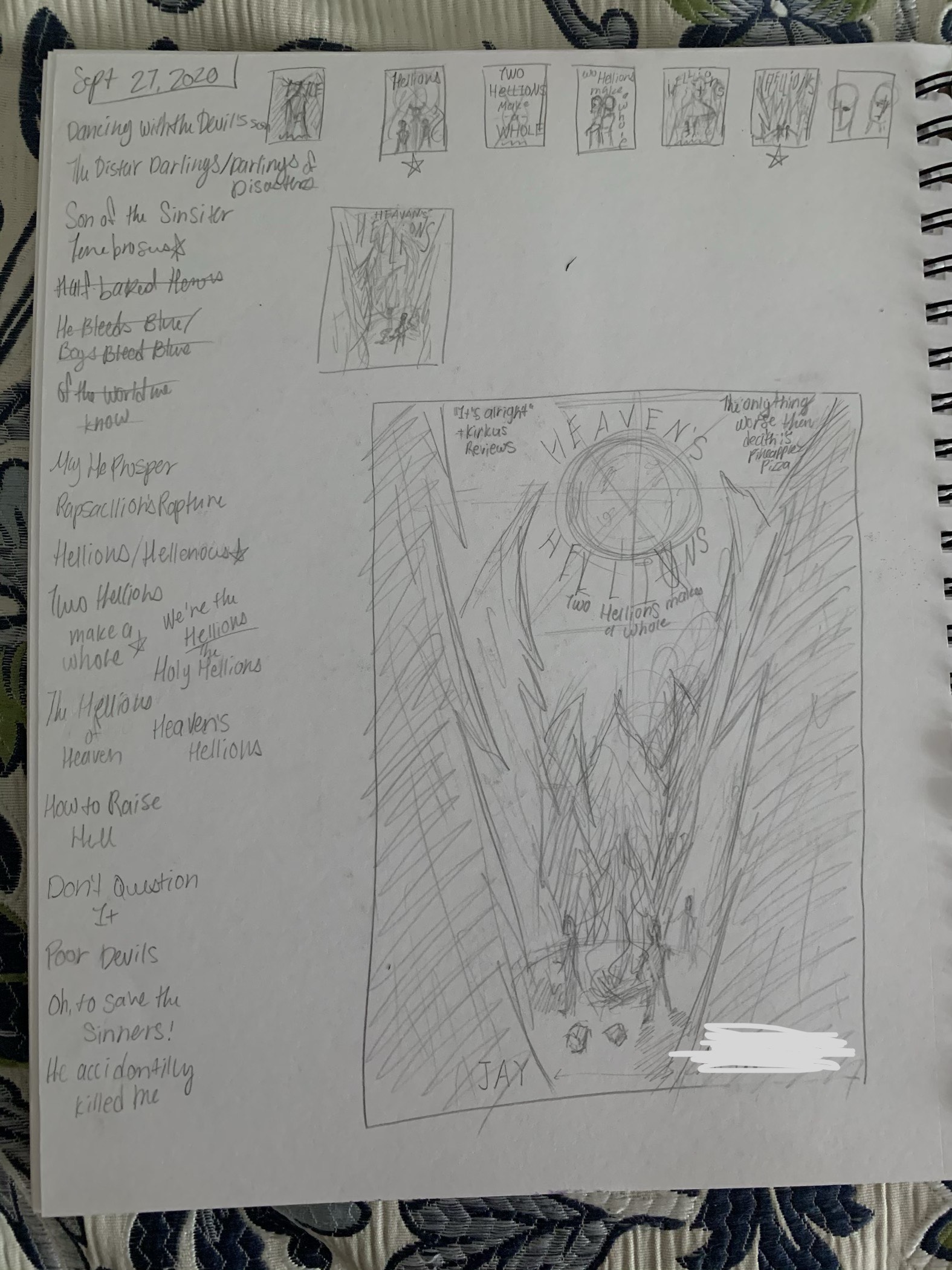
However, I do have the sketchbook that contained all the early brainstorming for Heaven’s Hellions.
This was the first time I write down anything related to Heaven’s Hellions.These were the initial character sheets.Me working on and refining the plot.
We would be here all day if I were to go into all of the little changes that were made to the base concept.
What Heaven’s Hellions turned out to be.
Dark. I didn’t know that I the ability to do that, to hurt characters like that, to put them through some of the worst hardships that anyone can endure. I truly reached into the noir depths of my soul — pockets of darkness I didn’t even know I have.
The gist of the novel (I get to call it that!) is after four teenagers mess with an ouija board in the woods, two of them run away into the cover of the night, one gets possessed, and the last has to pick up what’s left. We follow Henry and Everett, the two that didn’t run off, as they try to figure out what happened to the others, Clay and Addison.
Clay’s body shows up. It’s rumored that Everett was the killer. Out of desperation, he tries to find Addison to clear his name.
The reader watches in horror as Everett keeps flinging himself into more dangerous situations in a desperate attempt to alleviate his guilt. He finally brings Addison home, and while the cheers of the search party bounce off the trees, Everett finds out that his best friend and his father went into the woods to search for him. Three weeks pass and they haven’t returned.
Everett snaps like a toothpick. Sure that he can bring home his loved ones, he goes after them and dreams of a happy ending.
He gets captured by a cult.
Unspeakable things happen to him.
In the end, when he’s face to face with the people he tried to save, he kills himself.
10 things this books has taught me:
1: I am not a planner. At all.
I tried my hardest to write an outline. I tried a loose outline, I tried an outline that was very detailed, I tried character cards, I tried scene cards. All of that planning suffocated me. When I sat down to write the thoroughly planned draft, nothing felt right and I hated it.
I loved the mystery of not knowing what was going to happen when I sat down and wrote. I let my characters take my hand and pull me through the story.
There were very few things I knew I wanted to implement from the getgo that actually made it.
2: How to motivate myself to write when I didn’t want to
This is something all writers struggle with at some point. This isn’t to say that I never had writer’s block — I most certainly did — but I had to learn what was me not being motivated and what was me genuinely having problems with my story, and how to deal with each accordingly.
3: How to write a book (wow really? No way.)
I had to adopt this “eh, fuck it” mentality that allowed me to make mistakes, write awful scenes, and some of the worst prose I have ever laid eyes on (I’ll get to that in a second). I had to learn to let go of making this book flow, having it be pretty, hell, having it be readable. I had to constantly remind myself that not only is this the first draft of a book, it’s the first draft of my first book, ever. Just let it be bad. And this is a mentality I adopted fairly early on which is what allowed me to write a book in five months.
4: I’m a character person through and through
I kept writing because I wanted to be with my characters. I wanted to see what they would do next, I wanted to write them interacting and doing things. They are what kept me going when I wanted to quit.
5: Don’t share first drafts
This is the first book I didn’t share the first draft of with my friends, and it’s the first book I’ve completed. Sharing those first drafts puts eyes on the most vulnerable stage of my work, and it placed unnecessary pressure on me to make it flow. Not having people see it gave me the space I needed to make Heaven’s Hellions exist.
6: I need to vent my writing somehow
Shout out to one of my closest friends Emily for having to put up with my constant writing rambles. I would send her monstrous texts talking about something going on with the characters, or scenarios that could happen, or ideas I wanted feedback on. And while she was extremely encouraging, she was never afraid to give tough love.
Thank you, Emily, you mean the world to me and this book wouldn’t exist without your support.
7: My plot bunnies mutate
A plot bunny is another idea for a completely different story. For example, you could be working on a fantasy novel but you get the idea for a contemporary romance instead. Plot bunnies become problems when you start chasing them instead of finishing your current project.
Because I grow so attached to my characters, I can’t stand to let them go. So, when I get a new idea for a seemingly completely different story, I just pick them up and drop them into that narrative. It’s not pretty and it muddies up my mind and my draft.
8: I’m not good at implementing preexisting ideas
When I go for my walks, I get tons of ideas for my stories. In fact, I was planning on having Everett be the son of Satan (among other plot ideas) that never got woven in.
When I sit down to write, I reread what I wrote, then I go from there; I improvise. So all that I had planned gets left out and sulks at the edge of my project.
9: I really enjoy breaking formatting
I love having words float around on a page, make sentences run on, or mash sentences together. Towards the end of the book, I used a lot of filtering to show how my character no longer feels in tune with himself. It’s so much fun to alter the style of the prose to fit in with and extenuate the character’s state of mind.
10: How to make first-person POV work
Does that make me sound conceited? I love first-person POV, but I knew that already. I learned how to make first-person, well, personal. I learned how to keep filtering to a minimum, and when used, make it feel authentic. Now, authentic to Ett or myself has yet to be determined. I wouldn’t say I’m the best at it, but writing 51k words in a certain POV is bound to teach me something.
What I’m good and bad at
That header was a lie; I can’t tell what I’m good and bad at. I’m so close to my work and I have just finished it, I can’t objectively tell what I succeeded and failed at. This isn’t to say that I think I was good at everything I attempted, or that I bombed everything at every turn. I simply don’t know. So, in a few months, I’ll make a more in-depth post about what I did right and wrong in my first novel. Stay tuned.
My favorite parts:
Here are some of my all-time favorite quotes of the book (I feel weird saying that I have favorite quotes in my own damn novel).
For context, this is when Everett and Henry are looking in the woods with a search party for Addison.
“Do you think she’ll be found alive?” Henry asks, his voice barely trumping the whisper of wind in the trees.
“Of course she’ll be found alive.” I say.
“Then why haven’t we been calling her name?”
I also love the last two lines, edgy as they may be. But they’re indicative of the negative character arcs I tried to implement into the novel (let me have my angst):
“I soak in the boy I used to know; I pretend I push up his glasses, and I imagine that he tells a joke.
I laugh as I put the gun to my temple and pull the trigger.”
For much of the book I was torn about whether I should give Ett a negative character arc or not; to keep him as a harmless little lamb or a wolf parading around as a doting sheep. I think I ended up somewhere in the middle.
It was so much fun to write him gaslighting people, lying, convincing himself that he was doing the right thing, among other things. It was exhilarating to write an almost unwittingly manipulative person, to learn about how manipulation works, and to explore the complexities of abuse cycles. I’m not saying I did it well, or that it was effective — I have no clue, but I tried.
I didn’t write any romance and I’m glad I didn’t. Heaven’s Hellions also touched on toxic friendships; Henry and Ett were overly reliant on one another. It wasn’t just that they bickered badly or that they were mean. I wanted to explore codependence and resentment. I wanted to write people that were so afraid to let go that they practically killed themselves and others.
My least favorite parts:
There are so many. My god. I know for a fact this book has tonal and pacing issues. There aren’t enough characters and only two were actually developed. There are plot holes the size of the Grand Canyon. Again, I can’t say what they all are because I’m too close to it right now.
Many of the mistakes I’ve made are the typical novice pitfalls. Either way, when I can, I’ll look back over Heaven’s Hellions and figure out what I can improve upon going forward.
Here are some of the worst lines:
“He chuckles, and I move right along with every movement of his.”
“My limbs are too heavy to lift. They drop to my side as the light now burst in complete darkness.”
I’m sure there are so, so many more, but I don’t feel like mining for them. Trust me, they’re there.
Now what?
I’m not going to edit or revise Heaven’s Hellions any time soon. There is too much that needs to be done, and frankly, I’m tired of working on this book. I’m glad it’s over with. I need to move on to something different, something happier. But that isn’t to say that I won’t ever return to this project. I think that when I’m older, when I have a better grasp on characters, plot and plot structure, and how to write emotionally charged scenes effectively, I’ll give this another shot.
I’m planning on working on a project that’s a fluffy, cute, romance that I will try to push into a further phase of development. This new book is something that I want to revise, I want to edit, I want for people to actually read. Not sure if I’ll publish it or not, but I do know that I want critiques on my long-form work. I want this new project to be something that I’m proud of beyond it just existing.
Because I now know that I don’t like outlining, that I’m reliant on characters and that I may go to the very darkest corners of the universe for conflict, I need to plan for that. I still need to do so much brainstorming for this new book and frankly, I’m not quite ready to jump into another long-form project just yet.
I don’t know if I’m going to keep Everett and Henry and transfer them to a new world (not the romance project). I have the idea for a steampunk paranormal adventure, but I need to do a ton of research for that project. A ton. And it’s sad to say, but this may be the end of the characters I have been with for so long.
I’m going to work on short stories. I’m not burned out, exactly, but I definitely need to recalibrate so I don’t spit out the same thing again. I need to get passionate about my new world and characters, I need to get familiar with them. I want to work on this new website, write different stories, do more beta reading, and try things I haven’t been able to because I was so consumed with Heaven’s Hellions.
Thank yous
Thank you, Heaven’s Hellions, for being my first book. Thank you for all that you’ve taught me. Thank you for your adventures. Thank you for giving me something to latch onto while the world explodes around me. Thank you for giving me a reason to continue through some of my darkest times this year.
Thank you Henry for being the less confusing of the two; for being reliable, sarcastic, and bringing balance. Thank you, Everett for being so loose, for allowing me to project my deepest fears and the darkest parts of my soul onto you. Thank you Clay for being my first fictional dead body, and Addison, my first massive twist.
Thank you Emily for always being there and telling me the shit I needed to hear.
Thank you Google Docs for being available offline.
Thank you spell checkers.
Thank you to all the random authors who give writing advice on YouTube; you’ve taught me so much and provided me with endless entertainment.
And finally, thank you, dear reader, for getting to this point. I hope that you have faith in me, my writing, and my future endeavors.
I mean, the title says it all. I’m sure that in the history of everything, I am the only person to have ever struggled with motivation, and more specifically, the motivation to write. What can I say, I’m just that important.
It’s an odd feeling for a number of reasons. This past summer I was so fired up for this book, the setting, the mystery, the characters… but now the “oh, shiny” syndrome has taken over, and my poor little work in progress is as dull as carpet.
Here’s the thing about my plot bunnies; they don’t reproduce as in I get completely new ideas, nay, they mutate. I’m far too attached to my characters to ditch them like a frat boy to his girlfriend in a movie, so I just drag the poor things along, trying to find them an adequate home.
What I’m saying is that a story set in a paranormal reality akin to ours is tipping into steampunk territory. No, I don’t feel like explaining that jump to you, my dear reader. Well, okay, to be frank, I don’t even know how I made that jump (pogo stick on steroids, perhaps?).
My current WIP is an odd little child of mine that’s wandering about, bumping into things, and getting lost in closets. Maybe having it walking around gives it too much credit… that implies that it works.
It’s probably not an utterly fantastic thing that I’m falling asleep before writing the climax of this atrocity. Whoops.
It’s never seeing the light of day. Or night for that matter. Hell, it shouldn’t even see the light of my computer screen.
Don’t get me wrong (yes, I’m quite aware it’s easy to do that), I still care for it. It’s the first time I’ve ever gotten so far into a project like this (46k words) and it seems like such a shame to drop it now. I just need to kick my own ass, and get the damn thing over with.
My current strategy is to tempt myself with working on The New Thing™, but I can’t work on The New Thing™ until the Old Thing is done.
Still, it stings that I won’t really do anything with this first draft, ever. It will always be the first book I wrote; I guess that’s all it ever needs to be. I’ll bookmark the zingers of lines, I’ll take note of what worked and what didn’t, and I’ll be proud of myself for getting this far.
How have you wrangled with lacking motivation to write? Do you punch your indolent bum and force yourself to work, or are you brave enough to admit that you don’t? When do you think it’s fair to give up on a project?
Thanks for reading, friend. Until next time, don’t kill anybody and don’t die.




 J. V. Montague